Article: How To Create A Soft Translucent Finish With Ten Second Color
How To Create A Soft Translucent Finish With Ten Second Color
Learn how to create a softer, translucent decorative concrete finish with Ten Second Color by increasing acetone dilution and building color in light layers. Includes preparation, spray techniques, layering tips, and the right interior or exterior sealer options.
Ready to create a softer decorative concrete finish? Start with Ten Second Color, test the dilution and color on the actual slab, then protect the project with the right Concrete Resurrection sealer for its location and use.
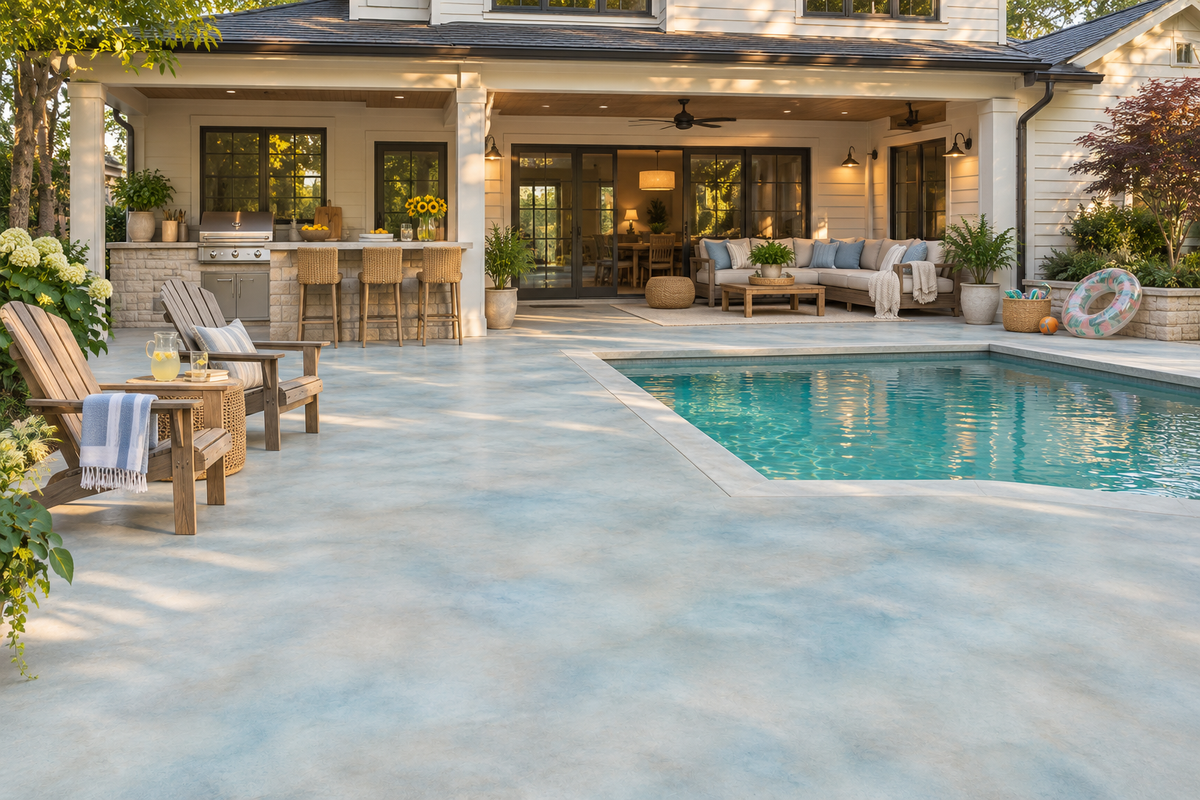
Ten Second Color gives decorative concrete its own character because it is translucent. Rather than hiding the slab, it lets natural movement, texture, repairs, and variation remain part of the finished look. For a quieter result, increase the acetone dilution and build the color with multiple light applications instead of one heavy pass.
Using four to six times the standard acetone amount creates a much softer wash of color than the standard mix. It is a simple way to make patios, floors, and decorative concrete feel more open and natural while still adding color, depth, and movement. The key is to test first, spray lightly, and seal with the right system for the location.
Quick Summary
|
DILUTION |
FINISHED LOOK |
BEST APPROACH |
|
Standard mix |
More concentrated, deeper color |
Use when you want a bolder base color or a more pronounced accent. |
|
4X acetone |
Soft, translucent wash |
Spray light coats and evaluate after each pass. It is a strong starting point for subtle color. |
|
5X to 6X acetone |
Very light veil of color |
Build slowly with extra passes. Expect the natural concrete to remain highly visible. |
All dilution descriptions in this article refer to the amount of acetone compared with the standard acetone amount for the TSC container. For example, if the standard mix calls for one gallon of acetone, a 4X dilution uses four gallons of acetone. Always make a complete test sample on the project concrete and take it through sealer before committing to the whole floor or patio.
Why Higher Acetone Dilution Creates A Different Look
Ten Second Color is an acetone-based penetrating color. It dries quickly and bonds in open concrete pores without chemically reacting with or etching the slab. Because the color is translucent, dilution, porosity, application method, and the final sealer all affect what you see.
At a 4X through 6X dilution, the same pigment is carried across more area by acetone. The result is not a weaker product; it is a more restrained color deposit. Think of it as a stain wash: the concrete is still visually present, but the overall tone becomes softer and more atmospheric.
The advantage is control. A light application can always be followed by another pass. A dark or puddled application is much harder to correct. This is especially important on patched, older, or naturally varied concrete where each area may accept color differently.
Prepare The Concrete Before You Mix
TSC needs clean, dry, porous concrete. Remove paint, sealer, oil, grease, wax, curing compounds, and anything else that could block penetration. On an interior floor, properly prepared concrete should have a light, open texture rather than a smooth or polished feel.
Check several areas with a small water test. The water should absorb and darken the concrete instead of beading on top.
If water beads, remove the coating or contaminant and prepare the surface again before staining.
If CR-765 Surface Prep and Etch is used, neutralize with CR-585 Surface Neutralizer, rinse thoroughly, and let the concrete dry completely before applying TSC.
Mask nearby walls, landscaping, doors, and anything that could be reached by fine spray. TSC dries quickly, but overspray can travel.
Mixing Ten Second Color For A Softer Finish
Begin with the standard amount of acetone for the TSC package, then increase the acetone for the lighter effect you want. A 4X acetone dilution is a practical first test for a gentle transparent color. Move to 5X or 6X when you want the finished concrete to show through even more strongly.
Mix enough material for a consistent section so the color does not change because of a last-minute dilution adjustment.
Use only acetone-compatible containers and spray equipment. A normal garden sprayer is not automatically compatible with acetone, such as our ReCharger sprayer
Do not use electrical mixing equipment with acetone. Acetone is highly flammable; eliminate ignition sources, provide ventilation, and follow the safety instructions for the products being used.
Write down the test ratio, number of coats, and sealer used. That small record makes it possible to reproduce the look across the project.
How To Apply Ten Second Color
Start with a real test area. Apply the same dilution, spray pattern, number of coats, and final sealer planned for the full project. Do not judge the color from an unsealed test alone.
Use an acetone-compatible pump sprayer with a cone tip, such as the ReCharger Variable Mist Sprayer. Hold the tip approximately 24 inches above the surface and apply in a consistent circular pattern.
Keep the application light and moving. The concrete should look wet only for a few seconds. Do not flood the surface or allow TSC to puddle in low areas.
Work in manageable sections with slight overlap between passes. Because TSC flashes dry quickly, keep your motion consistent instead of trying to rescue a heavy spot after it has set.
Let the application dry, then decide whether another light pass is needed. At 4X through 6X acetone, multiple thin coats are the right way to develop the finished tone.
For movement or a more natural finish, layer a second TSC color sparingly after the first color has dried. Use a lighter hand with the accent color than with the base color.
After the last application is dry, vacuum loose dye residue before sealing. Do not rinse TSC with water.
Techniques For A More Natural Translucent Effect
Build in thin veils. Two or three light passes look more intentional than one saturated application.
Vary the overlap slightly while staying consistent in your spray height and pace. That produces movement without obvious lap marks.
Use a soft neutral or closely related color as the first layer, then mist a deeper shade only where you want depth.
Let concrete variation remain visible. TSC will not hide cracks, patches, aggregate, or repairs, and those characteristics often become part of the look.
Avoid judging from a color chart alone. Concrete porosity, existing slab color, texture, lighting, dilution, and the final sealer all change the outcome.
Choose The Right Sealer For The Project
TSC should be protected with a compatible clear sealer after it is dry and loose residue has been removed. The right choice depends first on whether the project is indoors or outdoors, then on the desired sheen and traffic level.
|
LOCATION |
SEALER OPTION |
APPLICATION NOTES |
|
Interior |
CR-515 Inside Acrylic |
Low-gloss, water-based protection for decorative floors with everyday residential traffic. Apply thin coats; if rolling, keep a wet edge and avoid excessive back-rolling that can disturb color. |
|
Interior |
CR-545 Inside Matte Urethane |
Two-component, water-based matte urethane for a durable low-sheen finish. Follow the current mixing, film-build, recoat, and cure instructions exactly. Can give a slight orange peel effect. |
|
Interior |
CR-546 Inside High Gloss WB Urethane |
Two-component, water-based high-gloss urethane when increased durability and a higher-shine finish are the goal. Follow the current product instructions exactly. |
|
Exterior |
CR-561 Outside Acrylic |
For exterior TSC projects, Outside Acrylic must be sprayed using appropriate solvent-resistant spray equipment. Do not roll it over the TSC. Mask thoroughly and apply light, even spray coats. |
For any sealer applied over TSC, use light, controlled coats. Aggressive rolling or repeated back-and-forth passes can temporarily reactivate and move the color. Review the current Technical Data Sheet for the selected sealer before starting, including all surface temperature, moisture, mixing, coverage, recoat, and cure requirements.