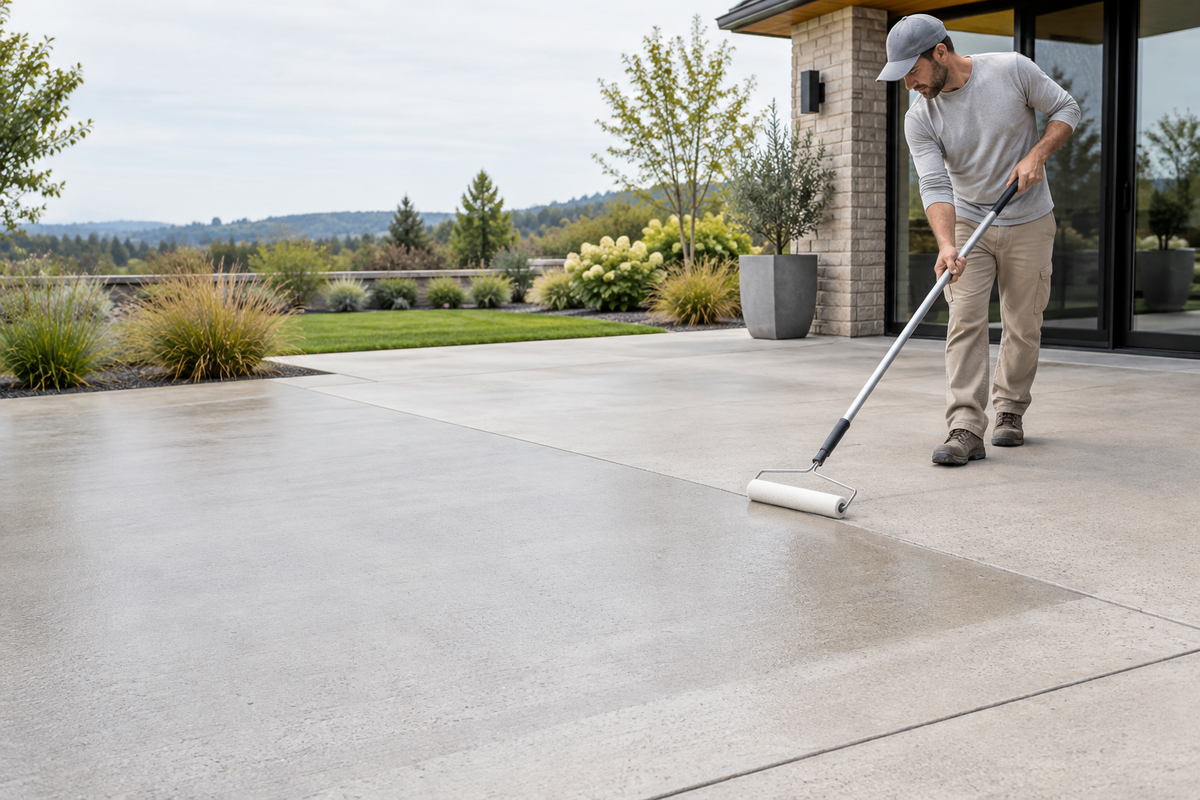
Article: Concrete Epoxy Floor Coating: A Beginner’s Guide
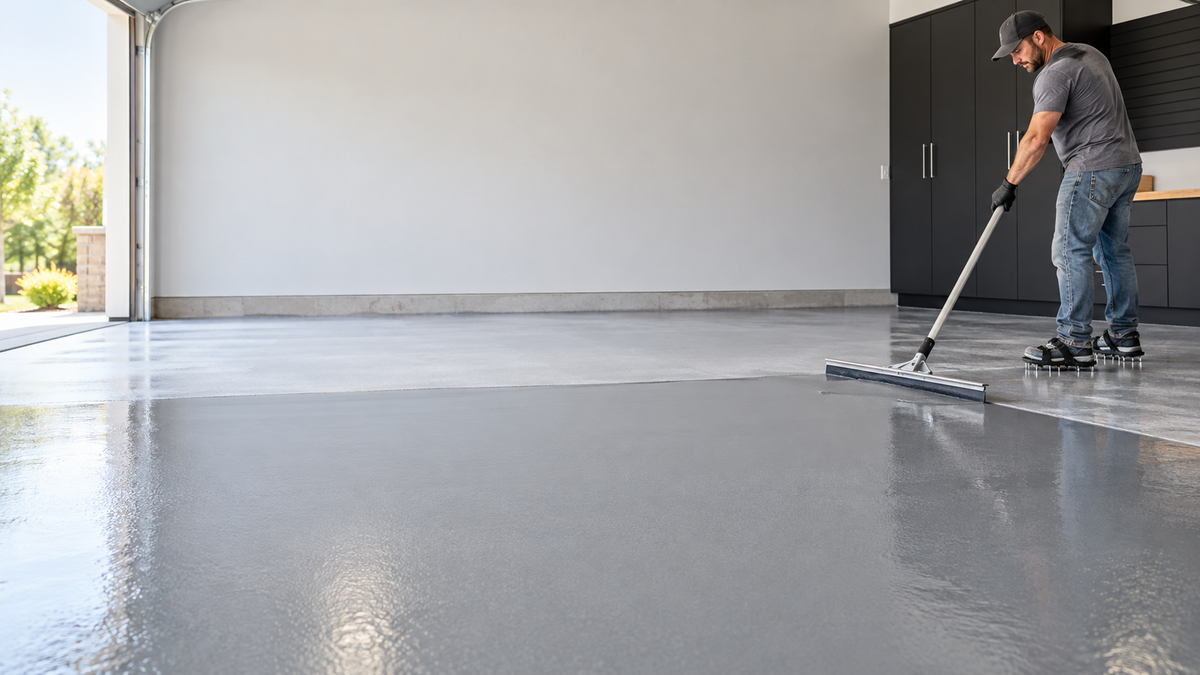
Concrete Epoxy Floor Coating: A Beginner’s Guide
Epoxy can turn a worn concrete floor into a durable, easy-to-clean surface with a solid-color, decorative-flake, or one-of-a-kind metallic finish. It is a great option for garages, basements, workshops, retail spaces, and other interior concrete floors—but long-term results depend on proper preparation, correct mixing, and choosing the right protective topcoat.
This beginner’s guide explains what concrete epoxy is, how it works, the finish options available, and the steps that make the difference between a coating that performs well and one that peels, scratches, or wears prematurely.
Quick Summary
-
Concrete epoxy is a two-component coating made from resin and hardener that cures into a durable, seamless protective layer.
-
Successful epoxy starts with clean, dry, properly profiled concrete. Preparation is the most important part of the job.
-
Epoxy can be used for solid-color floors, decorative flake systems, and metallic finishes.
-
Epoxy on its own is not UV stable and can develop micro-scratches with use.
-
For floors exposed to sunlight or where added scratch resistance is desired, protect epoxy with a compatible High Gloss Urethane or Matte Urethane topcoat.
-
An interior floor finish may be used over epoxy to help disguise fine scratches and make maintenance easier, but floor finish does not provide UV protection.
What Is Concrete Epoxy Floor Coating?
Concrete epoxy flooring is a two-component coating system made of resin and hardener. When the two parts are mixed at the correct ratio, they chemically react and cure into a hard, seamless layer that bonds tightly to properly prepared concrete.
Unlike ordinary paint, epoxy builds a thicker protective coating that stands up well to abrasion, stains, and many common chemical spills. That is why it is a popular choice for garages, basements, workshops, and commercial interiors that receive regular foot traffic or equipment use.
Epoxy is durable, but it is not indestructible. Proper prep, application thickness, cure time, and topcoat selection all affect how the finished floor performs.
Why Choose Epoxy Over Other Floor Coatings?
Epoxy offers a combination of durability and design flexibility that is difficult to achieve with basic paint or a simple clear sealer.
-
Durable protection: A properly applied epoxy coating helps protect concrete from abrasion, stains, and many common garage or workshop spills.
-
Seamless, easy-to-clean surface: Once cured, the coating creates a continuous surface without grout lines or joints to trap dirt.
-
Custom finishes: Choose a solid-color floor, broadcast decorative flakes, or create a dramatic metallic design.
-
Long-term value: With correct preparation and maintenance, an epoxy floor can provide years of service in residential spaces.
For areas that receive direct sunlight or where you want extra scratch resistance, plan to include a compatible urethane topcoat as part of the system—not as an afterthought.
Important: Epoxy Needs UV and Scratch Protection
Epoxy is an excellent base coating, but epoxy by itself is not UV stable. In areas exposed to sunlight, it needs a protective topcoat such as a compatible water-based High Gloss Urethane or Matte Urethane. The urethane helps protect the epoxy from UV exposure while adding another layer of scratch resistance.
Even a quality epoxy floor can show fine, micro-scratches over time, especially in garages, entry areas, or other spaces with regular traffic. A urethane topcoat helps the floor hold up better against that everyday wear.
For interior floors without sunlight exposure, a compatible floor finish may be applied over epoxy as a sacrificial maintenance layer. Floor finish can help hide fine scratches and make the floor easier to refresh later. However, it is not a replacement for urethane where UV protection is needed.
Understanding Metallic Epoxy Pigment
Metallic epoxy creates a flowing, marbled look that can resemble polished stone, moving water, clouds, or lava. Liquid Nebula Metallic Epoxy Pigment is mixed into a compatible clear epoxy coat and manipulated during application to create movement and depth.
No two metallic epoxy floors look exactly alike. The final pattern depends on pigment color, application technique, working time, and how the material is moved across the floor. That variation is exactly what makes metallic epoxy a favorite for showrooms, retail spaces, entertainment rooms, and statement floors in a home.
Preparing Your Concrete for Epoxy
Surface preparation is the single most important step in a successful epoxy project. Epoxy must bond directly to clean, sound, porous concrete. Dirt, oil, old paint, sealers, curing compounds, or moisture issues can interfere with adhesion and lead to peeling or delamination.
Before coating, the concrete should be:
-
Clean and free of oil, grease, and contaminants
-
Dry and structurally sound
-
Free of old coatings or sealers that could block adhesion
-
Repaired where cracks, pits, or damaged areas are present
-
Properly profiled by mechanical grinding or the recommended etching process
Grinding or etching opens the surface and gives the epoxy the profile it needs to bond. Skipping or rushing this step is one of the most common causes of epoxy failure.
Step-by-Step: Applying an Epoxy Floor Coating
Every system has specific directions, so always follow the Technical Data Sheet for the products you choose. In general, an epoxy floor project follows these steps:
-
Clean and degrease the concrete. Remove dirt, oils, waxes, and other contaminants with the correct cleaner.
-
Repair cracks and imperfections. Fill cracks, pits, and damaged areas before coating. Epoxy can make surface flaws more noticeable rather than hiding them.
-
Grind or etch the concrete. Create the required surface profile so the epoxy can bond.
-
Mix the epoxy accurately. Follow the stated mix ratio and mix time exactly. Incorrect mixing can prevent proper curing.
-
Apply the epoxy in manageable sections. Maintain a wet edge and work within the product’s stated working time.
-
Add your decorative finish, if desired. Broadcast flakes into the wet base coat, or apply metallic pigment in the appropriate clear epoxy coat.
-
Apply a protective topcoat when needed. Use compatible High Gloss Urethane or Matte Urethane for UV protection and improved scratch resistance.
-
Allow the system to cure fully. Follow the product instructions before returning foot traffic, furniture, vehicles, or heavy equipment to the floor.
Common Epoxy Mistakes to Avoid
Most epoxy problems can be traced back to preparation, mixing, or timing.
-
Skipping the cleaning, profiling, or repair work
-
Coating concrete that still has sealer, paint, oil, or moisture issues
-
Mixing the wrong ratio of Part A and Part B
-
Mixing more material than you can apply within its working time
-
Applying in conditions outside the product’s recommended temperature range
-
Failing to use a UV-stable urethane topcoat in sun-exposed areas
-
Expecting epoxy alone to remain free of micro-scratches indefinitely
Plan the project before opening the material. Have your tools, repair materials, rollers, spikes, and decorative additives ready so you can work steadily once the epoxy is mixed.
Solid Color vs. Flake vs. Metallic Epoxy
Epoxy is not a one-look product. The finish you choose should match the room, traffic level, and amount of maintenance you want.
Solid-Color Epoxy
A solid-color epoxy floor gives garages, workshops, and utility spaces a clean, uniform appearance. It is a practical choice when durability and easy cleaning are the main goals.
Decorative Flake Epoxy
A flake system broadcasts colored chips into the wet epoxy base coat. Flakes create visual texture, help camouflage small imperfections, and can add traction depending on the system and topcoat. This is a popular garage-floor option.
Metallic Epoxy
Metallic epoxy delivers the most artistic and dramatic effect. It is ideal for a space where the floor is meant to stand out, including showrooms, retail interiors, finished basements, and feature rooms. Because the pattern is created during application, each floor is unique.
How Long Does an Epoxy Floor Last?
The lifespan of an epoxy floor depends on the preparation, coating system, traffic level, sunlight exposure, and maintenance. A properly prepared residential epoxy floor can provide many years of service. Areas with heavier traffic, vehicle use, sunlight, or frequent abrasion may need periodic topcoat maintenance sooner.
Protective urethane topcoats help the epoxy system resist UV exposure and everyday scratching. For interior epoxy floors without sun exposure, maintaining a compatible floor finish can help disguise fine scratches and provide a refreshable wear layer.
Getting Started With Concrete Resurrection
Epoxy flooring rewards careful preparation and a clear plan. Start by deciding whether you want a solid-color, flake, or metallic finish; then choose the appropriate epoxy system and protective topcoat for your space.
Concrete Resurrection offers epoxy floor coating systems, metallic pigments, and technical support to help first-time DIYers and experienced contractors create a floor that performs as well as it looks. If your floor will see sunlight, choose a compatible High Gloss Urethane or Matte Urethane topcoat. If your goal is to reduce the appearance of fine scratches on an interior epoxy floor, ask about a compatible floor finish for ongoing maintenance.
If you need help choosing a system for your project, contact our team before you start.