CR-590 Paint & Sealer Remover
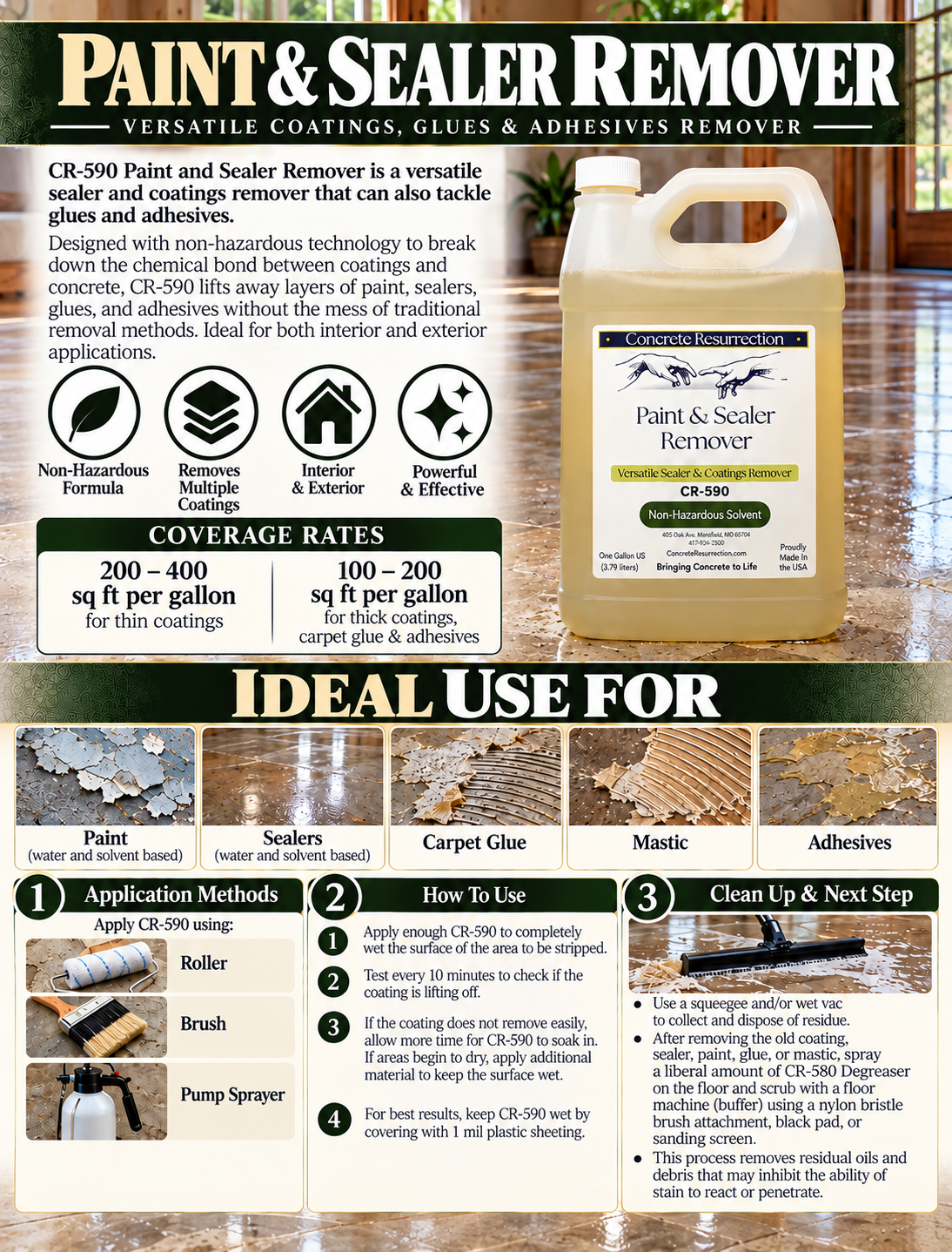
CR-590 Paint & Sealer Remover embodies cutting-edge non-hazardous technology, meticulously developed over a decade to revolutionize the process of removing unwanted coatings from concrete surfaces. Designed for both interior and exterior applications, this powerful formula excels at breaking down the chemical bond between coatings and concrete, "lifting" away layers of paint, sealers, glues, and adhesives without the mess of traditional removal methods.
What sets CR-590 apart is its ability to maintain a clean application process, avoiding the emulsion of materials that often complicates restoration projects. Whether you’re dealing with thin layers of paint or stubborn, thick sealers, CR-590 delivers impressive coverage rates. On average, users can expect to cover approximately 200-400 square feet per gallon for thin coatings, while thick coatings, carpet glue, and adhesives yield about 100-200 square feet per gallon, making it adaptable for a range of difficult removal tasks.
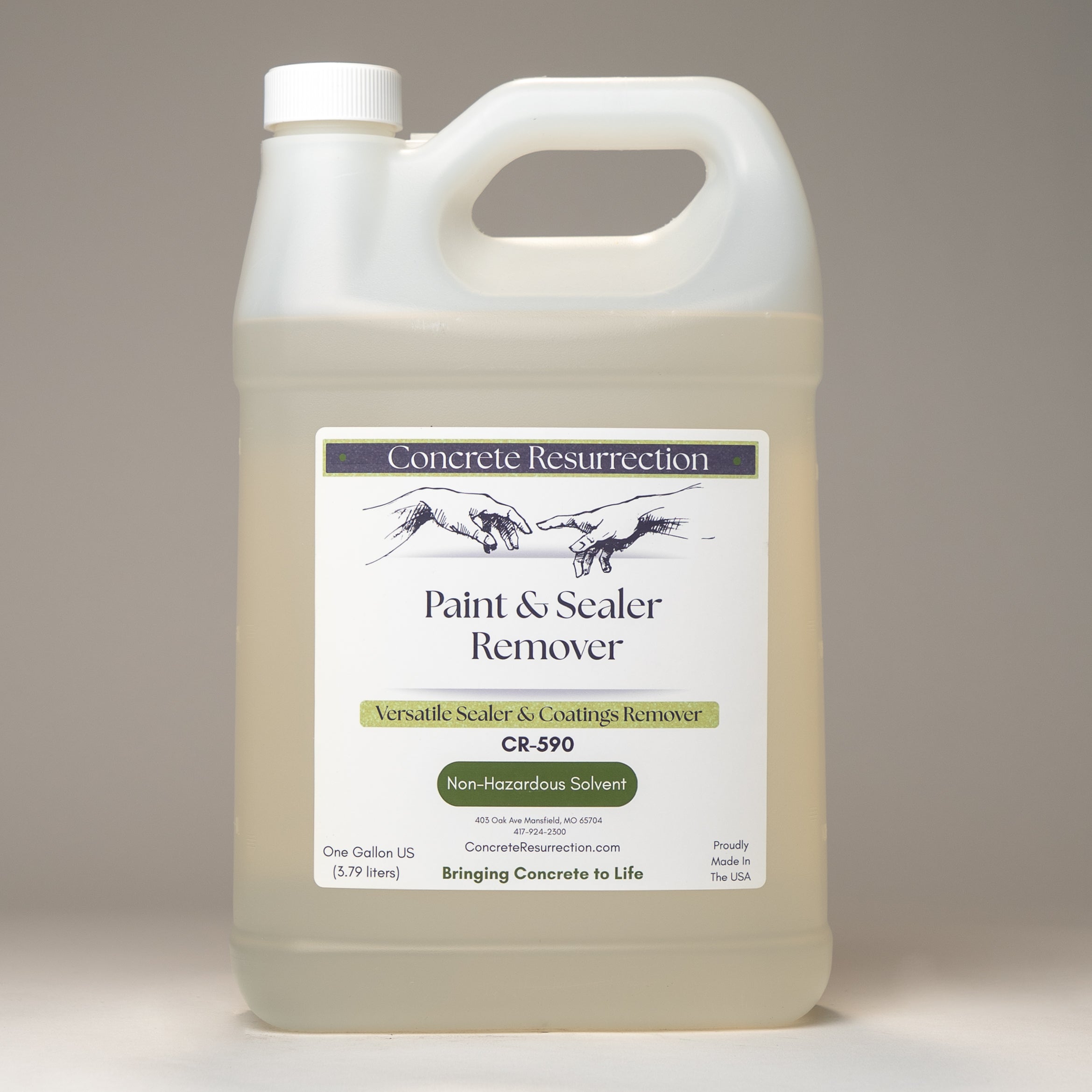
Key features of CR-590 include a convenient 1-gallon container tailored for both novice DIY enthusiasts and seasoned professionals. Its non-hazardous composition means it can be used safely around residential and commercial spaces, instilling confidence in its application.
For optimal results, it’s important to consider various conditions that may impact coverage rates, such as temperature, humidity, and surface texture. Despite these variables, CR-590's advanced formula ensures effective results, dramatically simplifying the process of restoring surfaces to their original condition.
Whether you’re tackling a home renovation, preparing a space for fresh finishes, or removing stubborn adhesives, CR-590 Paint & Sealer Remover promises a reliable solution that prioritizes efficiency and safety. Transform your project with this unparalleled product and rediscover the beauty of your concrete surfaces.
Choose options
Frequently Asked Questions
Concrete Resurrection Sealer Remover is designed to help remove compatible existing sealers and coatings from concrete before refinishing, staining, or resealing.
Removing the old sealer allows you to get back to a properly prepared concrete surface so your new stain, sealer, or coating can perform as intended.
Use Sealer Remover when an existing sealer needs to be removed before applying a new decorative concrete product.
You may need to remove the existing sealer if it is:
- Peeling, flaking, or failing
- Cloudy, hazy, or discolored
- Worn unevenly
- Preventing stain from penetrating the concrete
- Incompatible with the new product you want to apply
- Creating buildup from multiple previous applications
If the existing sealer is in good condition and you're simply recoating it, complete removal may not always be necessary. Check the preparation requirements for the new sealer or coating you plan to use.
A simple water test can help.
Place a small amount of water on several areas of the concrete. If the water beads or remains on the surface rather than soaking in and darkening the concrete, a sealer or other treatment may be present.
Keep in mind that very dense concrete can also absorb water slowly, so this test is a helpful indicator rather than a guarantee.
Not necessarily. Concrete sealers and coatings are made from different types of chemistry, and some are much more difficult to remove than others.
Before beginning the entire project, test the Sealer Remover in a small, inconspicuous area to make sure it effectively softens or removes the existing product.
Some high-performance coatings may require mechanical removal such as grinding.
Always start with a small test area.
Apply Sealer Remover evenly to the surface according to the product directions. Give the remover enough time to soften the existing sealer, but do not allow the remover to dry on the concrete.
Once the sealer has softened, agitate the area with an appropriate chemical-resistant brush or scrubber.
Scrape, scrub, or remove the softened material and collect the residue.
Depending on the type and thickness of the existing sealer, more than one application may be necessary.
After removing the sealer and thoroughly cleaning the concrete, allow the surface to dry and perform a water test in several areas.
Water should evenly absorb into and darken bare, porous concrete rather than bead on top.
Pay special attention to edges, corners, low areas, and spots where the previous sealer was applied heavily. These areas may require additional removal.
DIY Tip: Don't assume the sealer is gone just because the floor looks clean. The water test is an easy way to find areas you may have missed.
Try to avoid allowing Sealer Remover and dissolved sealer residue to dry back onto the concrete.
Work in small, manageable sections so you have enough time to agitate and remove the softened material while it is still workable.
If an area begins drying too quickly, follow the product instructions for reapplying or working the material.
It depends.
Thin or worn sealer may come off relatively easily, while multiple coats, heavy buildup, textured concrete, or certain types of coatings may require additional applications and agitation.
It's better to work methodically in smaller sections than to apply remover over a very large area at once.
For suitable exterior concrete, pressure washing can help remove loosened sealer and residue after the remover has done its job.
Use care to avoid damaging the concrete, surrounding landscaping, or adjacent surfaces, and properly contain and dispose of removed sealer and chemical residue.
For interior projects, use appropriate wet pickup and cleaning methods rather than flooding the floor.
Not yet.
Before staining, the old sealer and all remover residue must be completely removed. The concrete should then be prepared according to the requirements of the stain you plan to use.
For penetrating stains, perform a water test. Water should absorb evenly into the concrete. Areas that still bead may require additional sealer removal or preparation.
Allow the concrete to dry completely before proceeding with products that require a dry surface.
Yes, but the surface must first be thoroughly cleaned and prepared.
Remove all traces of the old sealer, Sealer Remover, and loosened residue. Then follow the surface-preparation requirements for your new Concrete Resurrection sealer.
Do not apply new sealer over leftover remover or softened sealer residue.
Depending on your project, helpful tools may include:
- Chemical-resistant gloves and appropriate protective equipment
- Chemical-resistant stiff-bristle brush
- Floor scrubber for larger areas
- Scraper or squeegee
- Wet/dry shop vacuum
- Pressure washer for appropriate exterior projects
For larger floors, using a floor machine with the appropriate chemical-resistant scrubbing accessory can make the job considerably easier.
For a DIY project, remember:
Test → Apply Remover → Keep It Wet → Agitate → Remove Residue → Clean Thoroughly → Water Test → Repeat if Needed
Take your time. Completely removing the old sealer and residue is much more important than trying to finish the stripping process quickly.