
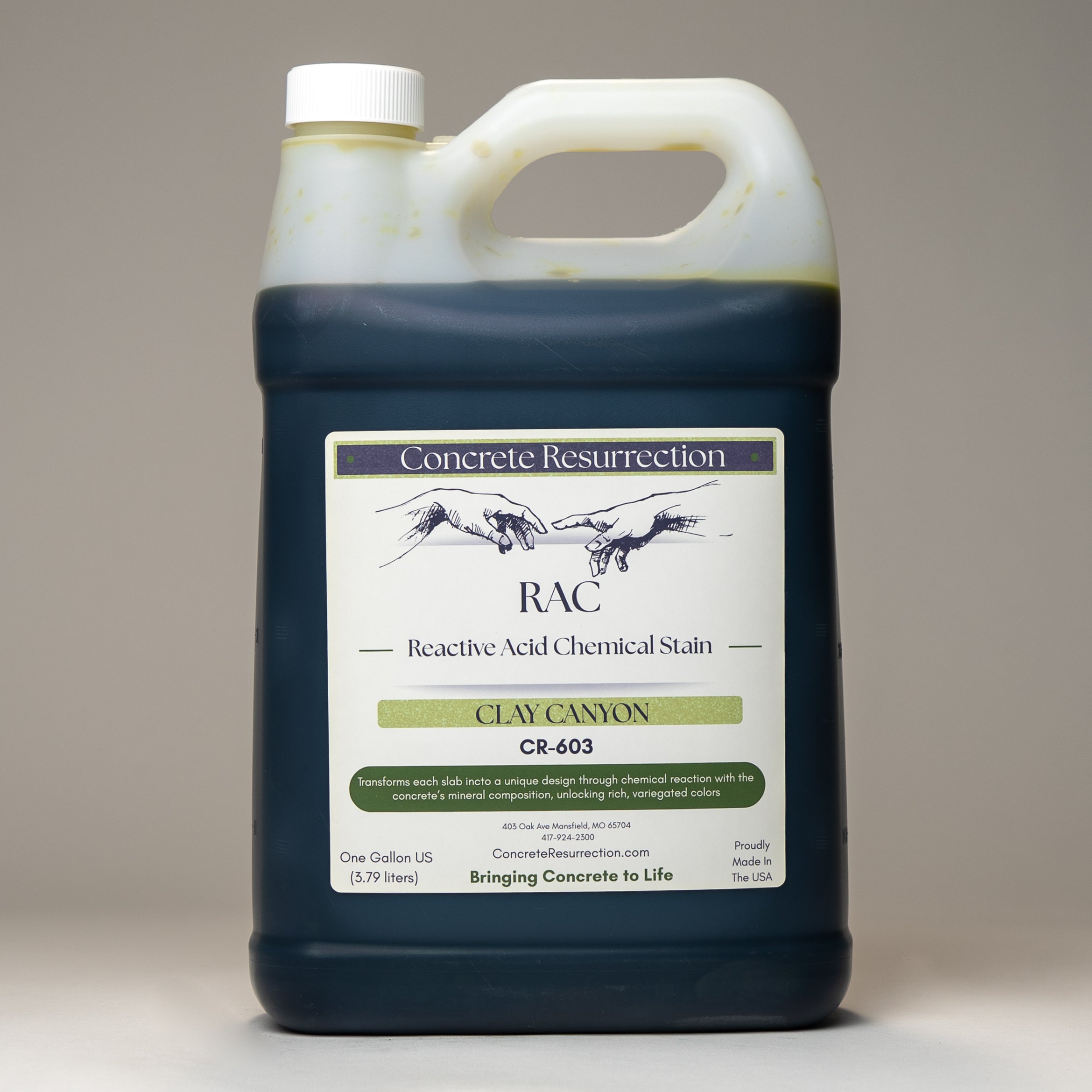
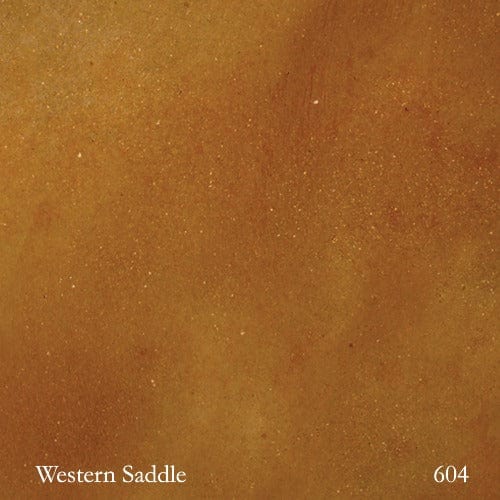
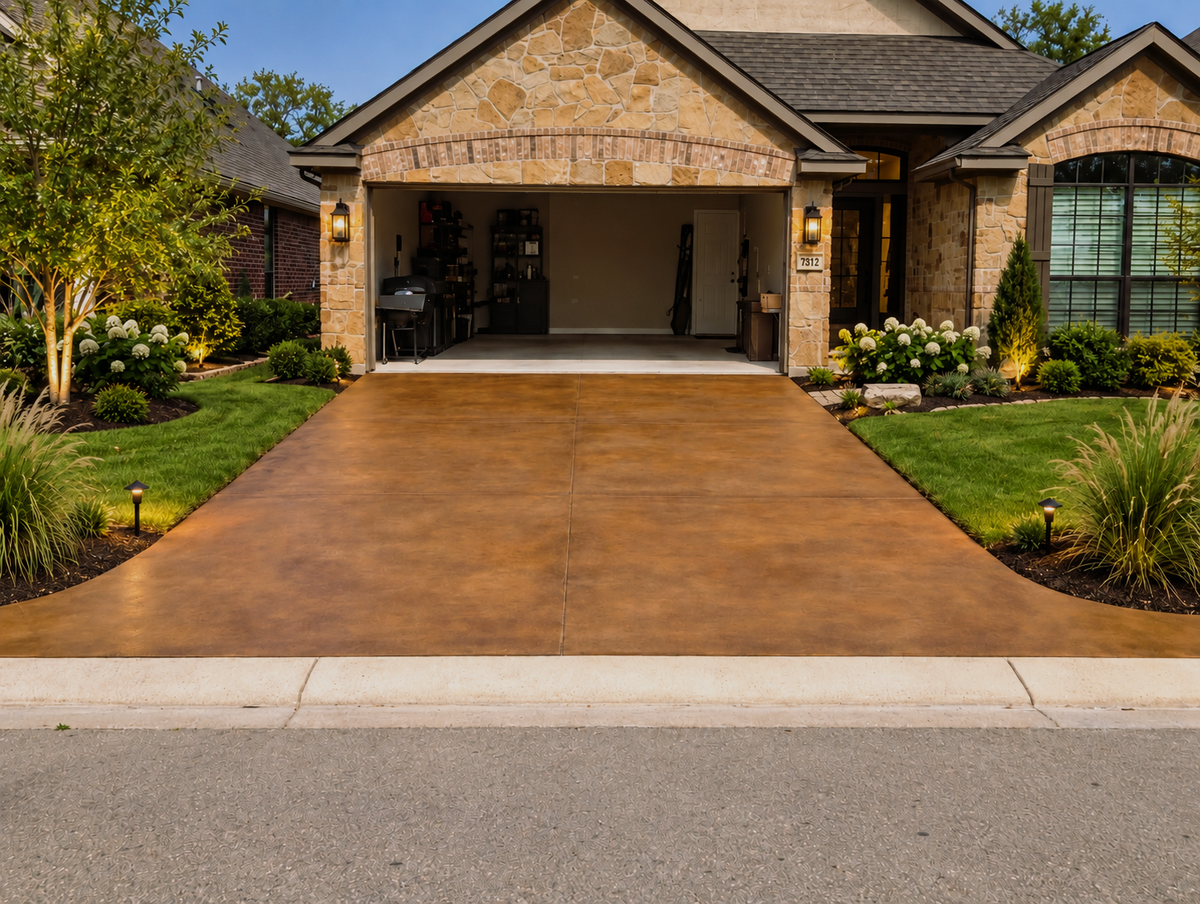

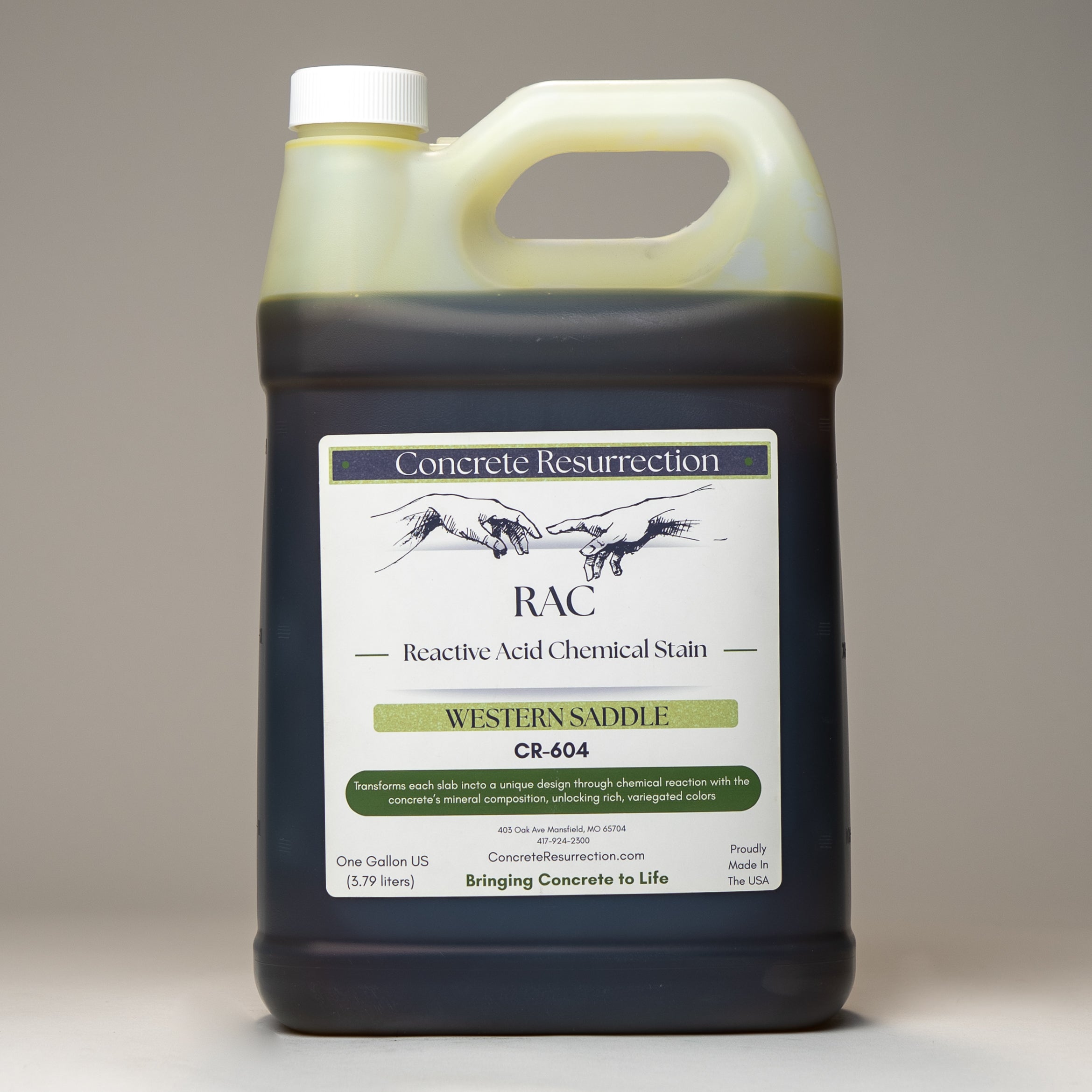
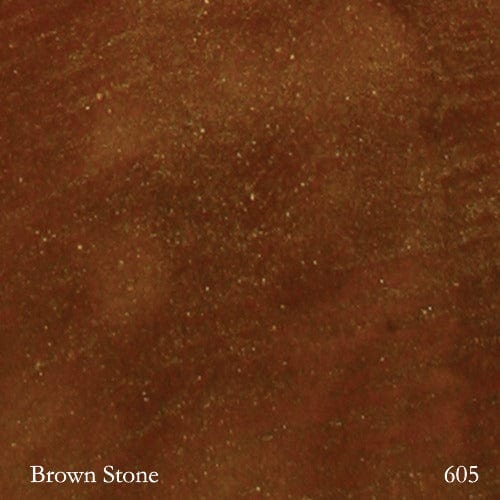
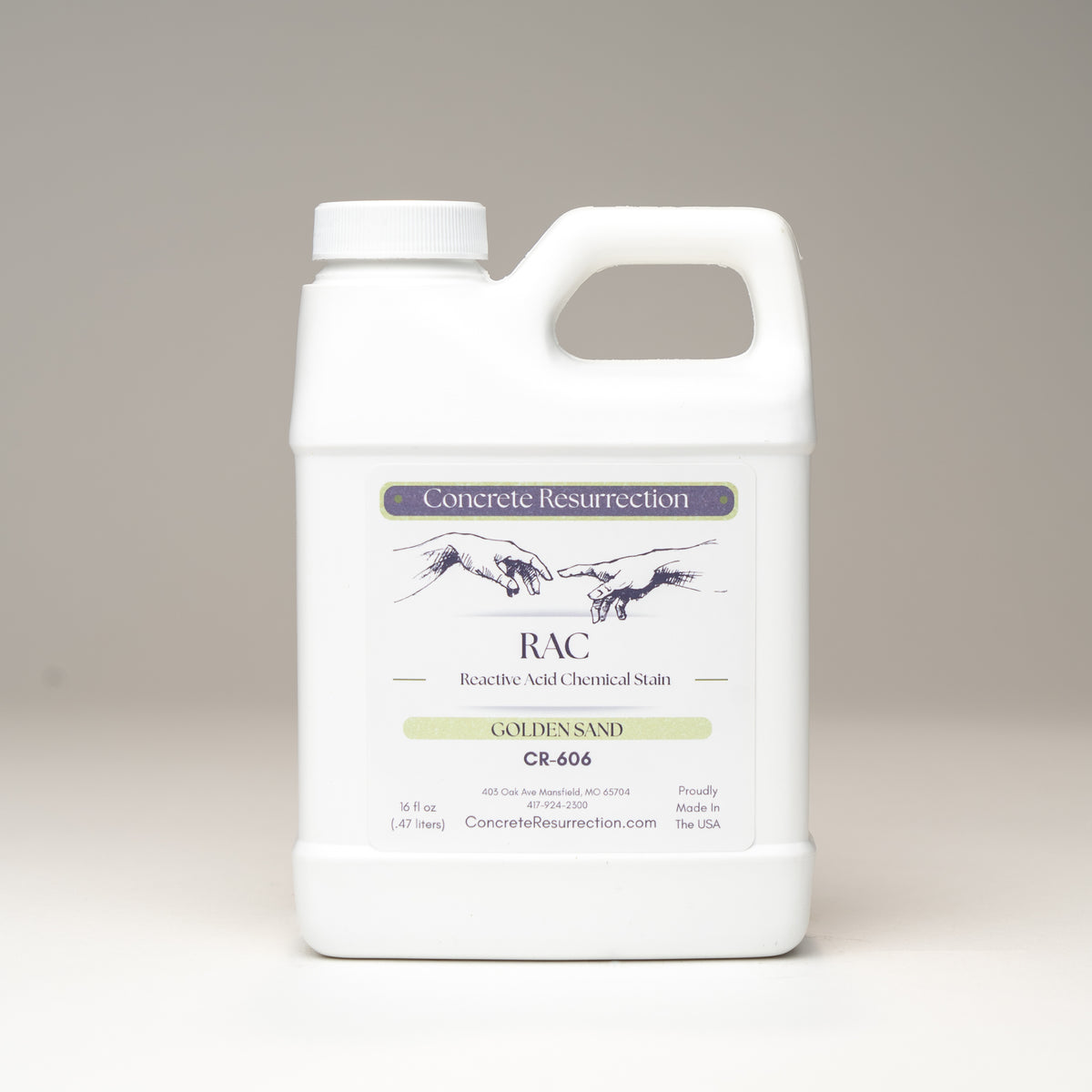
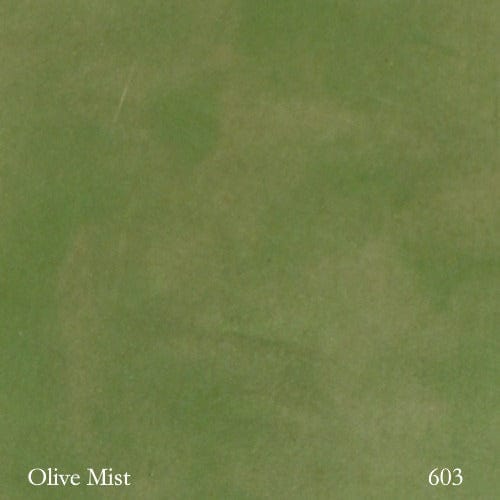
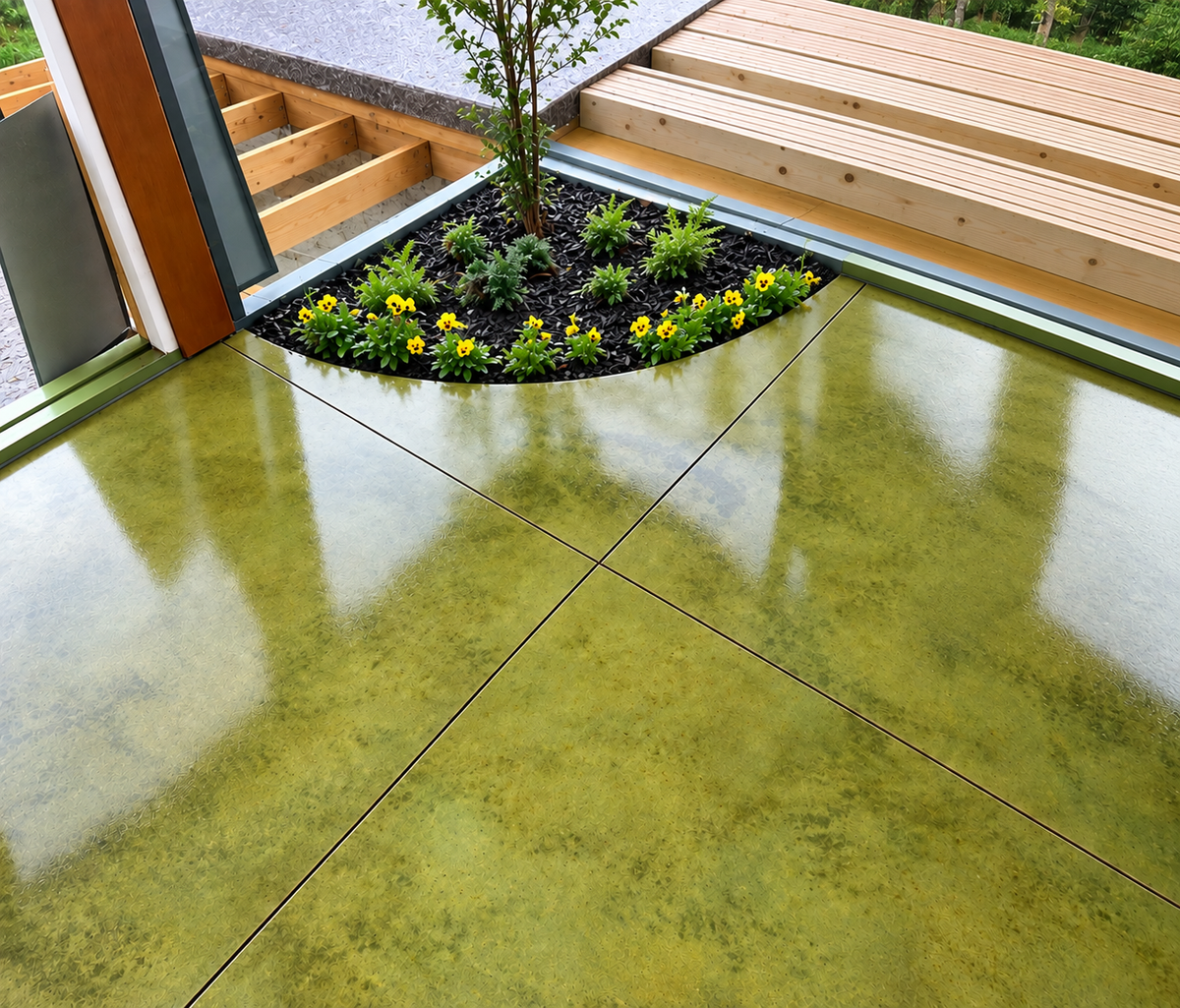
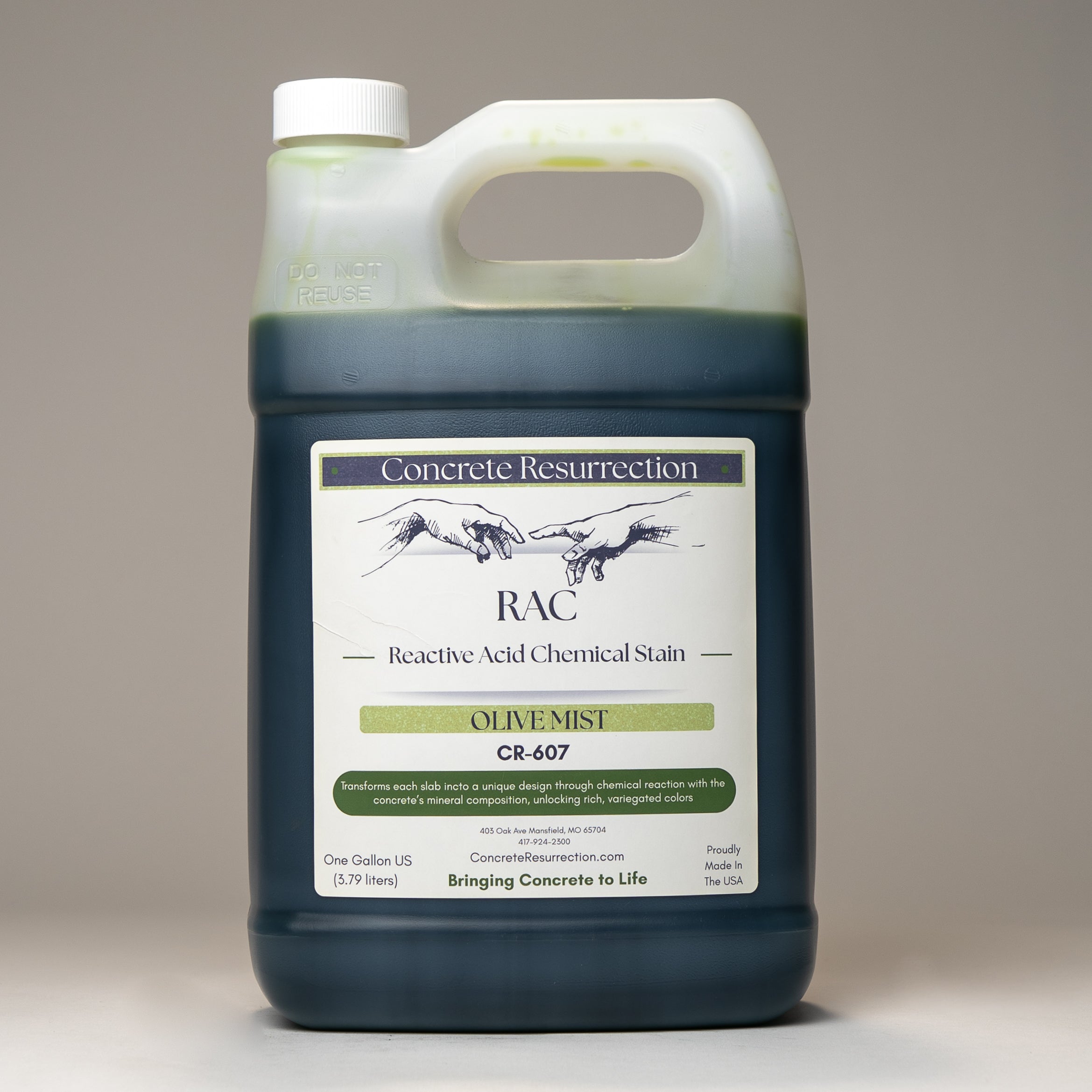
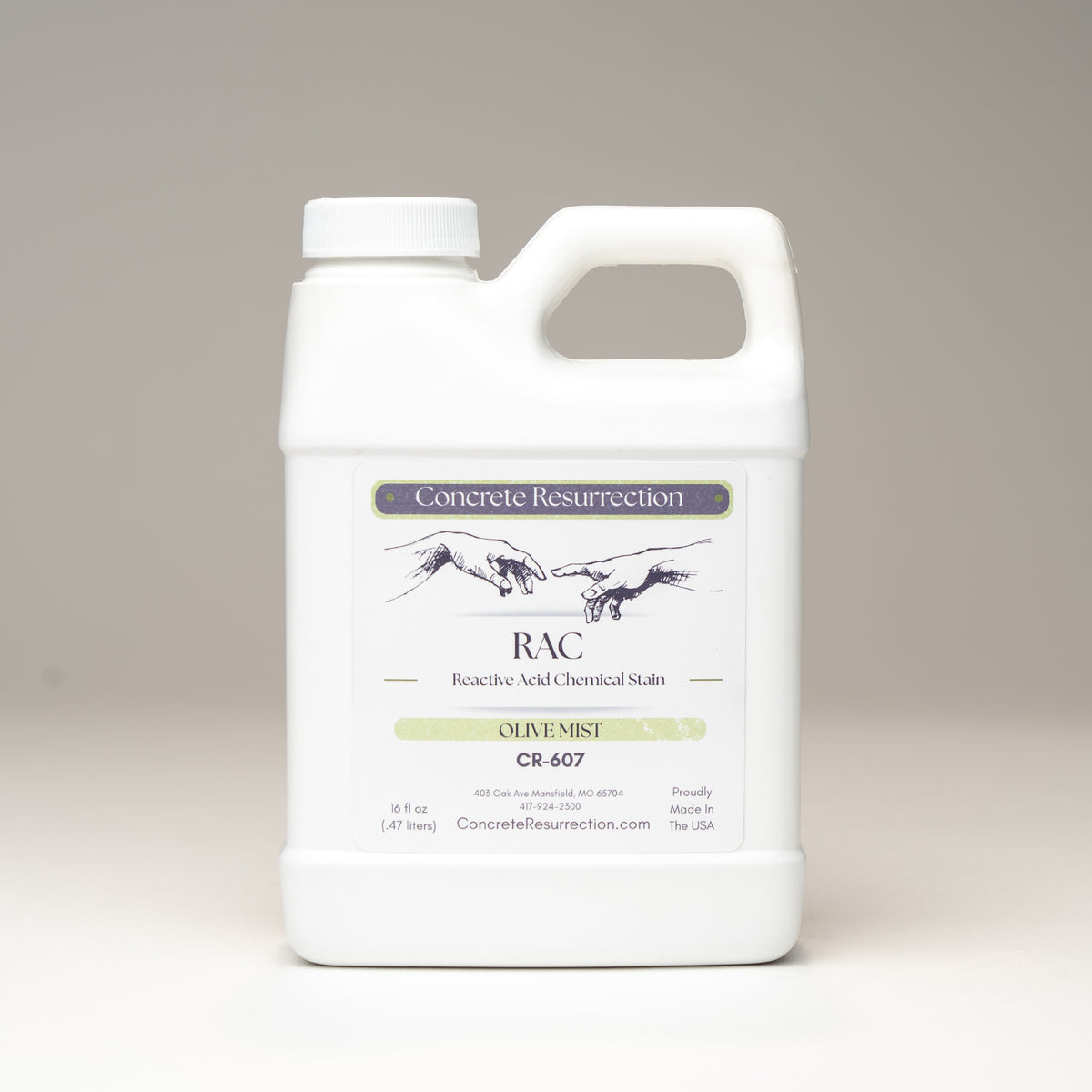
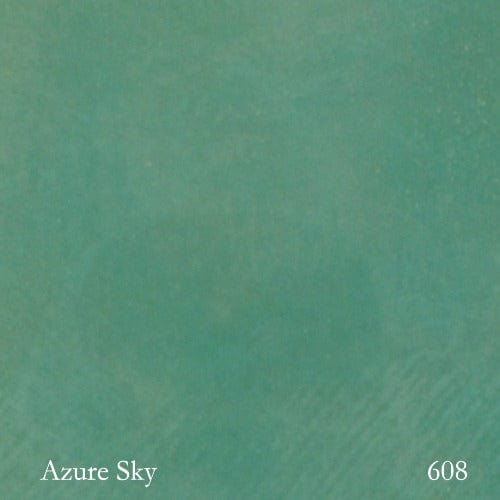
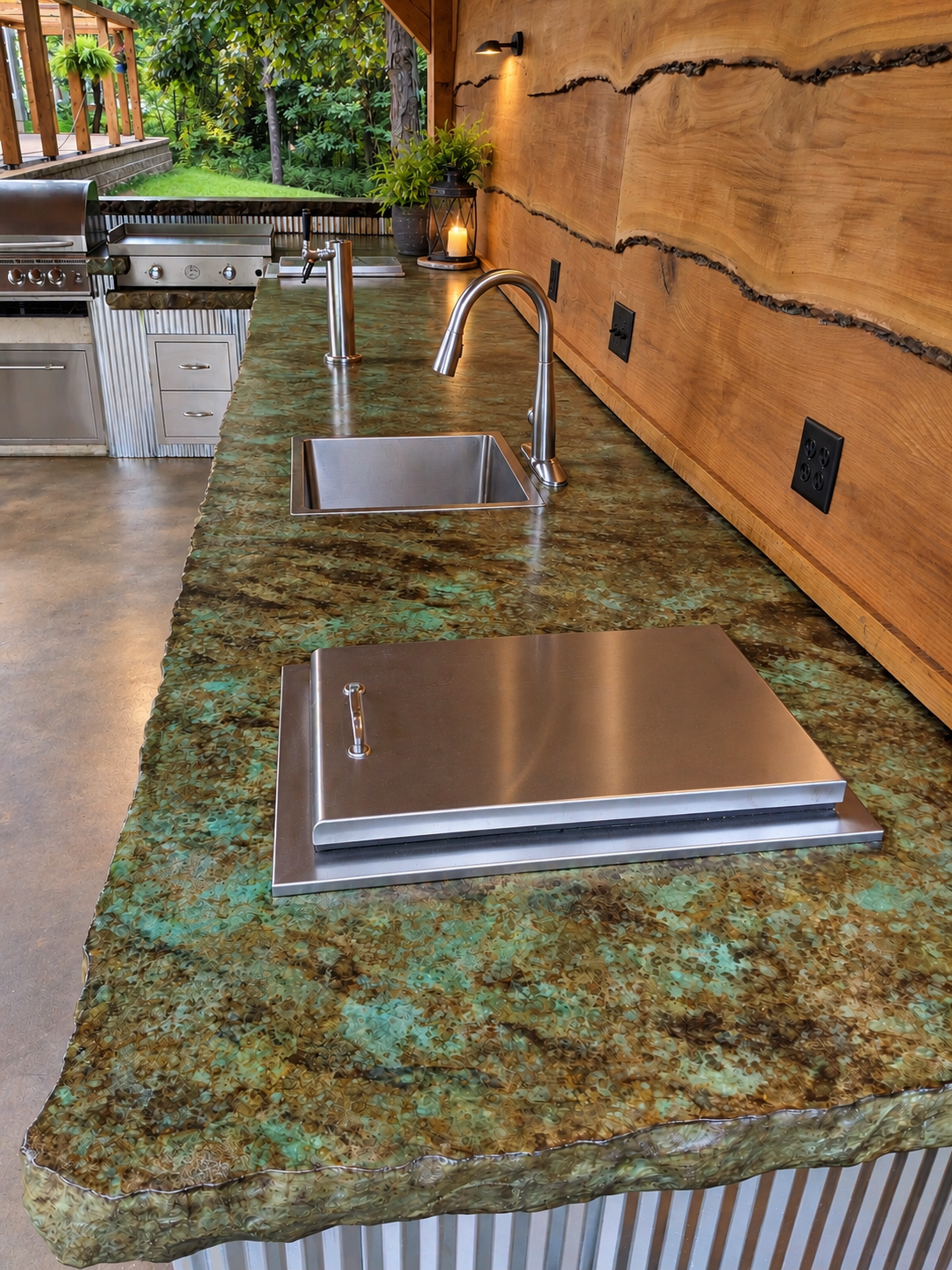
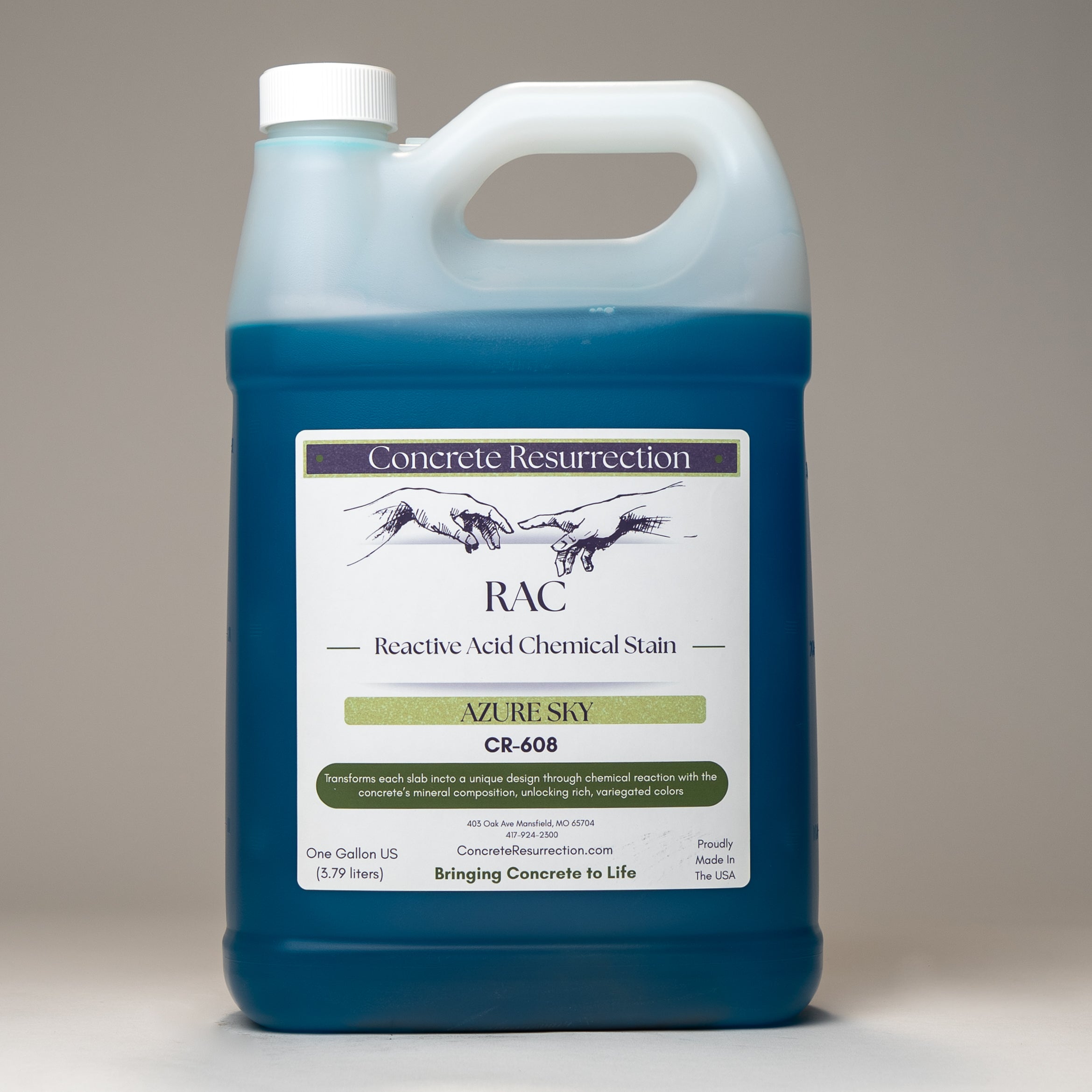

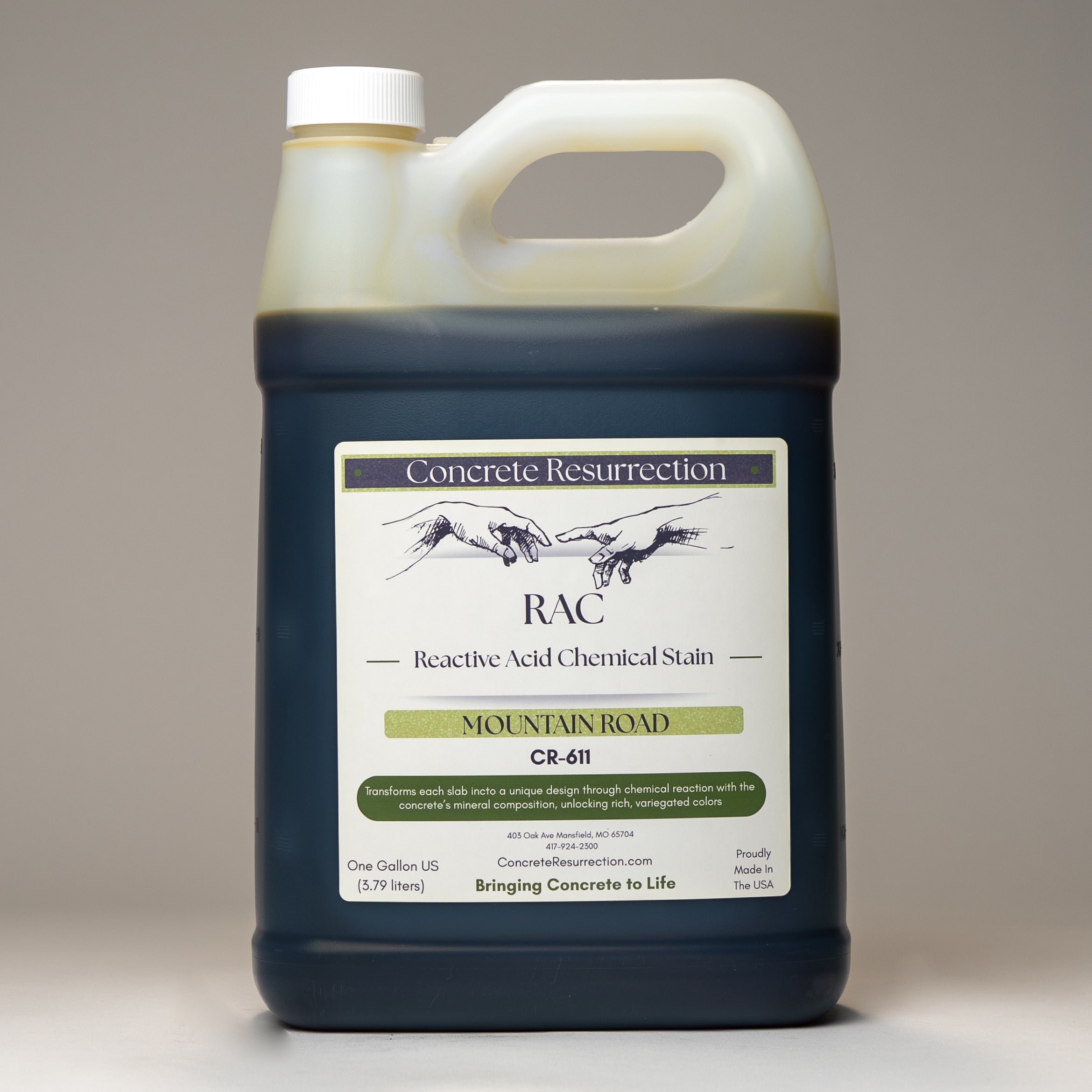

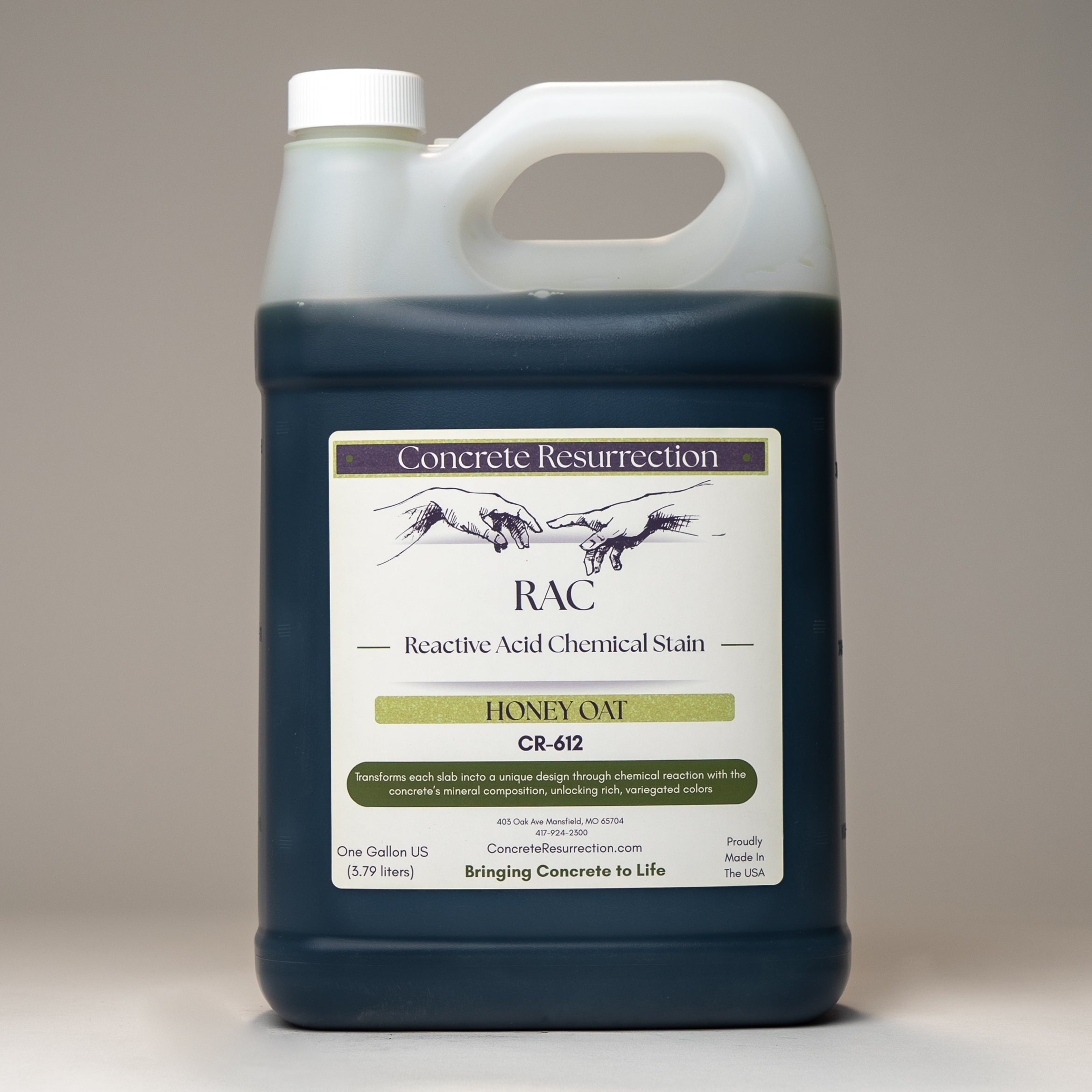

Reactive Acid Chemical (RAC) Concrete Stain
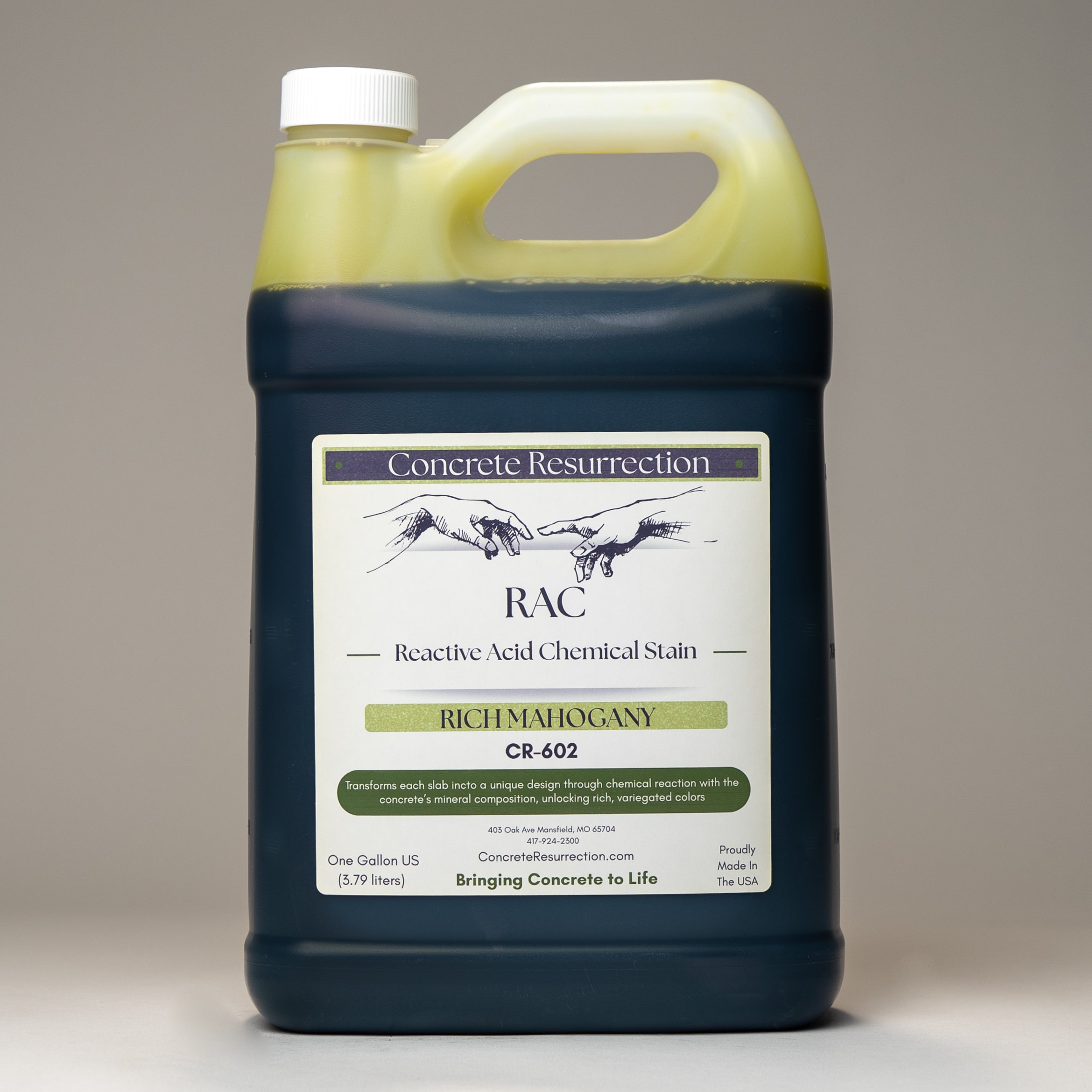
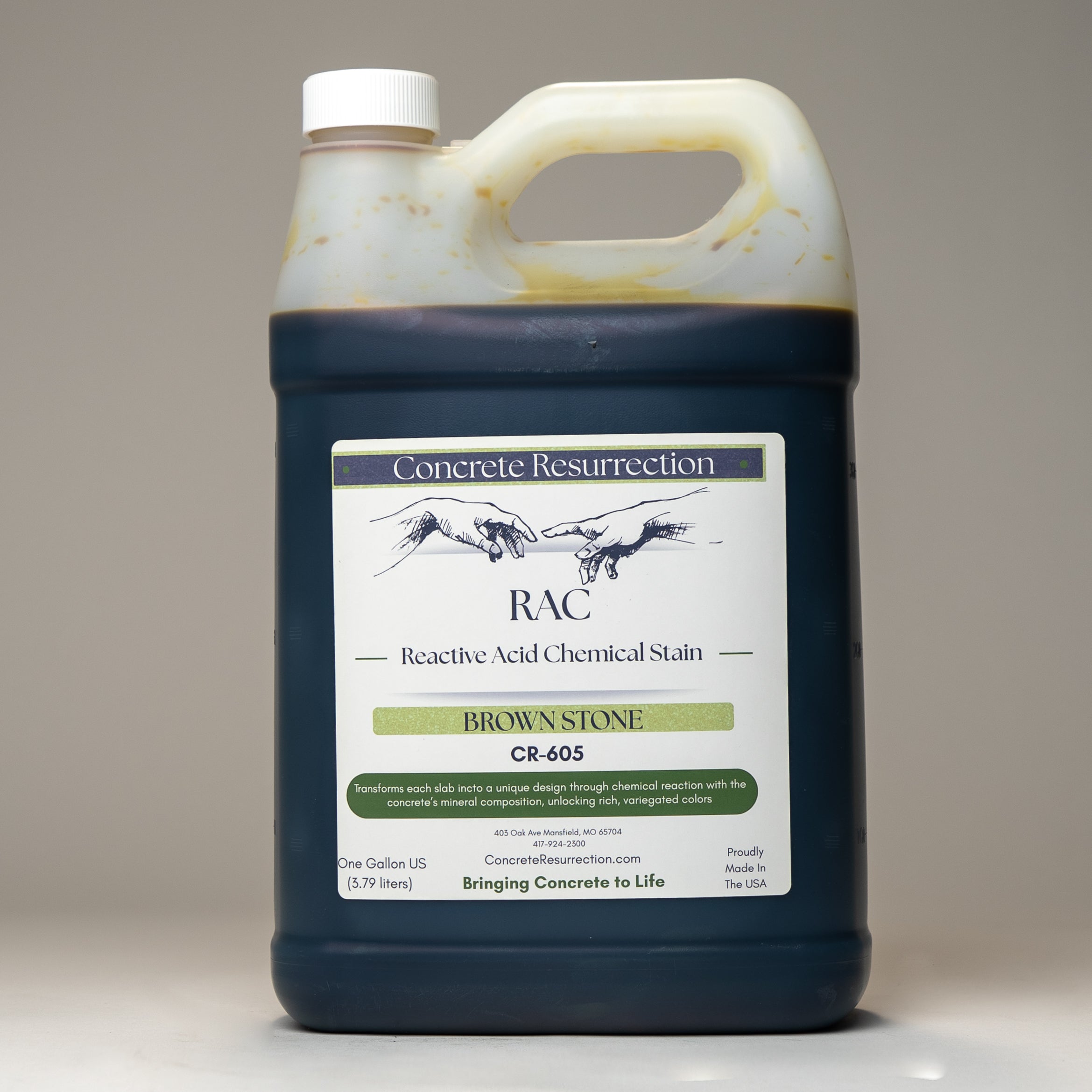
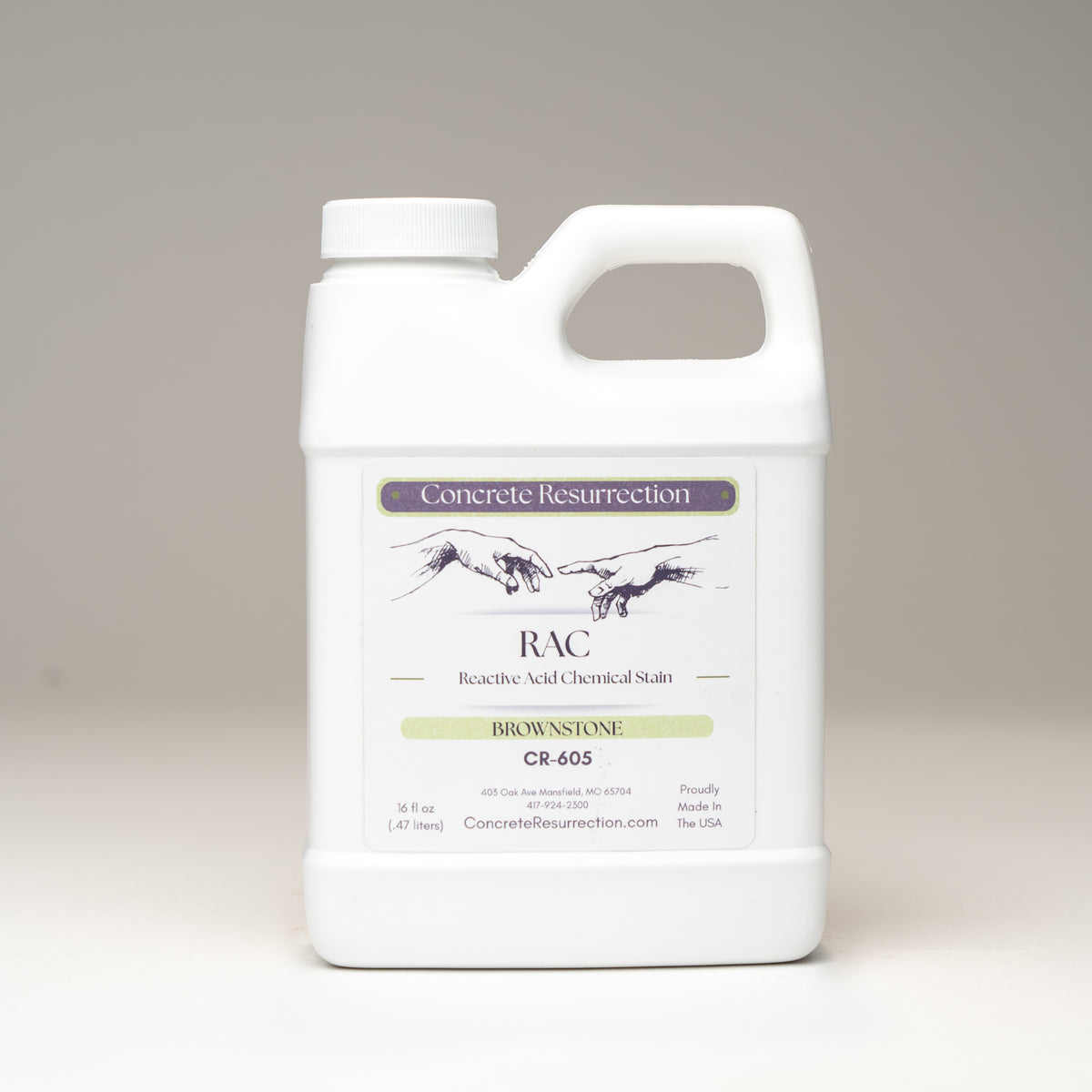
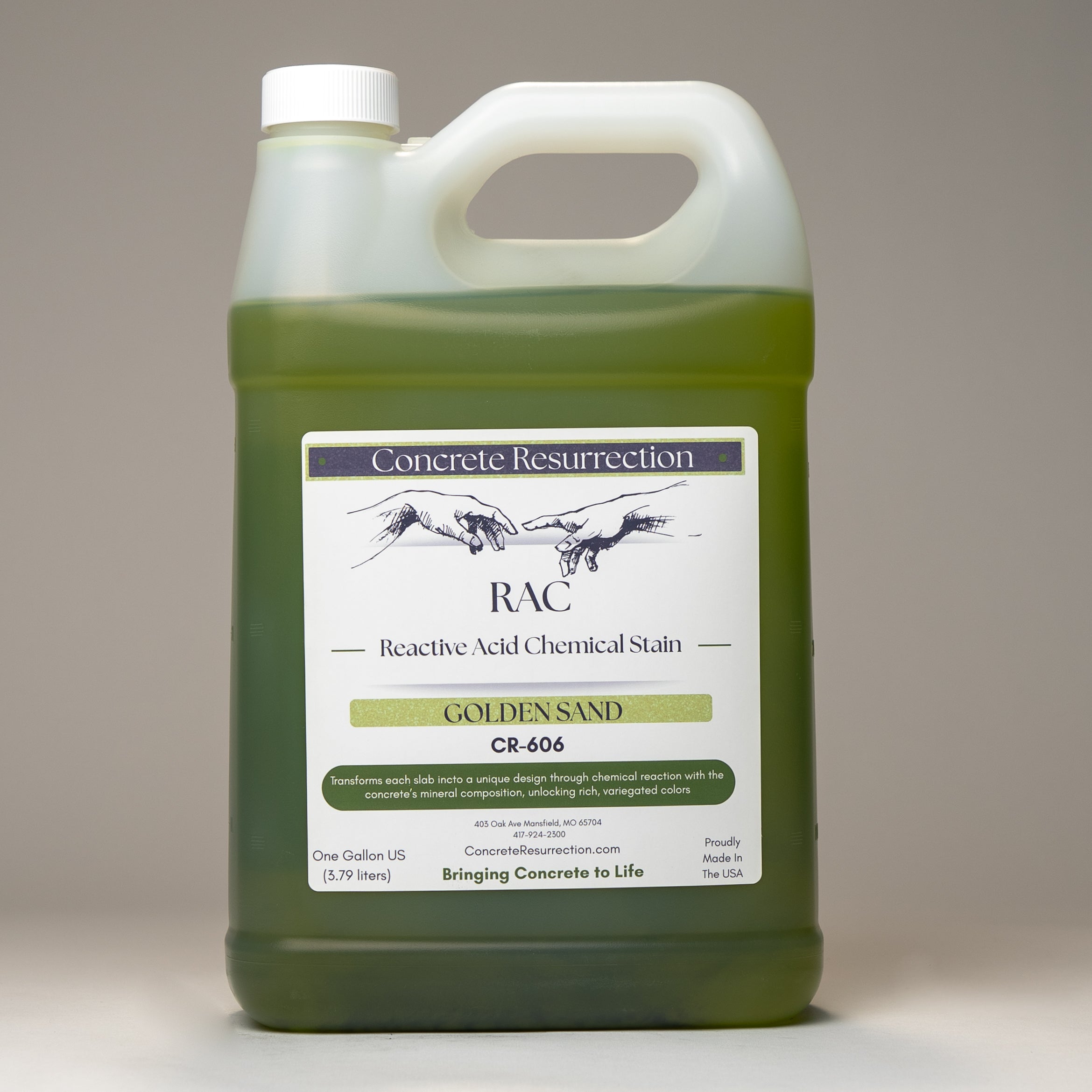
RAC Reactive Acid Chemical Concrete Stain
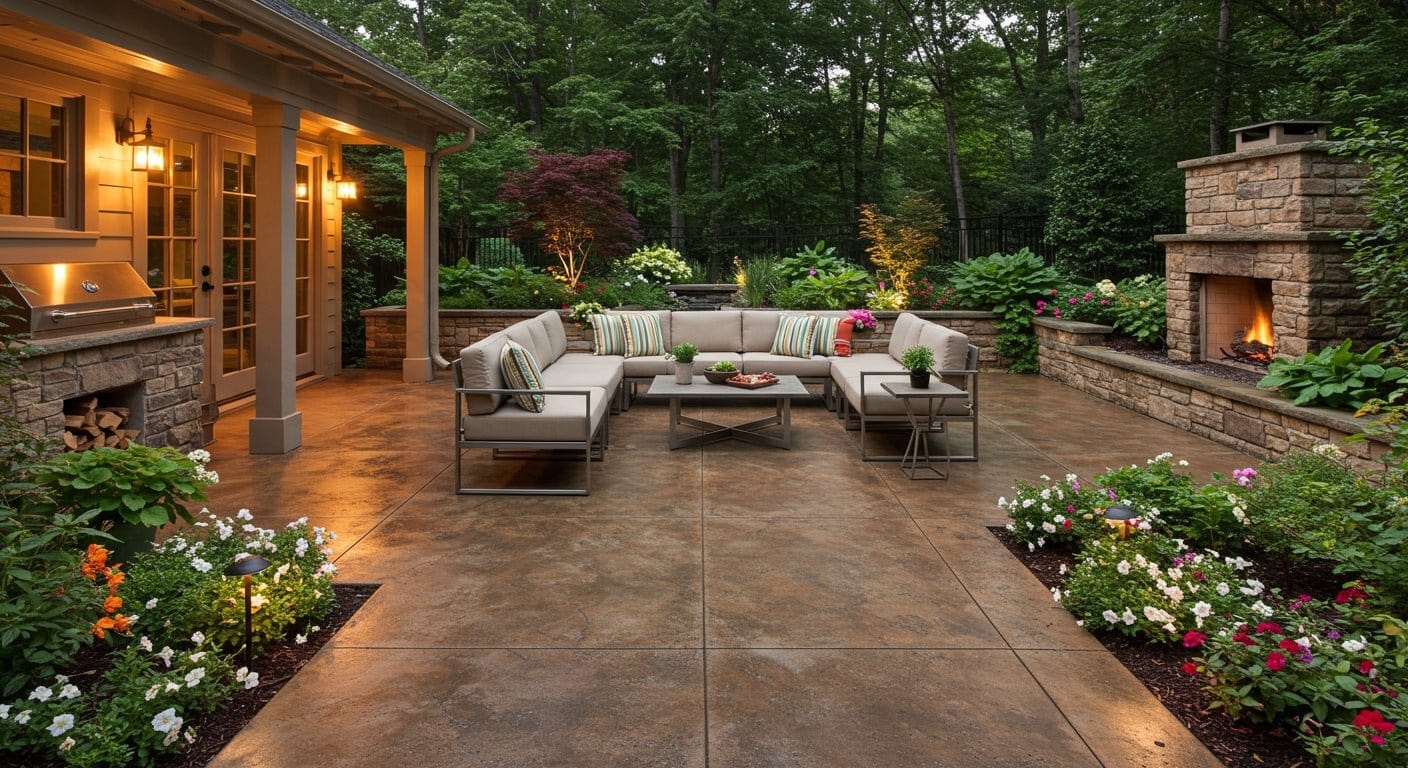
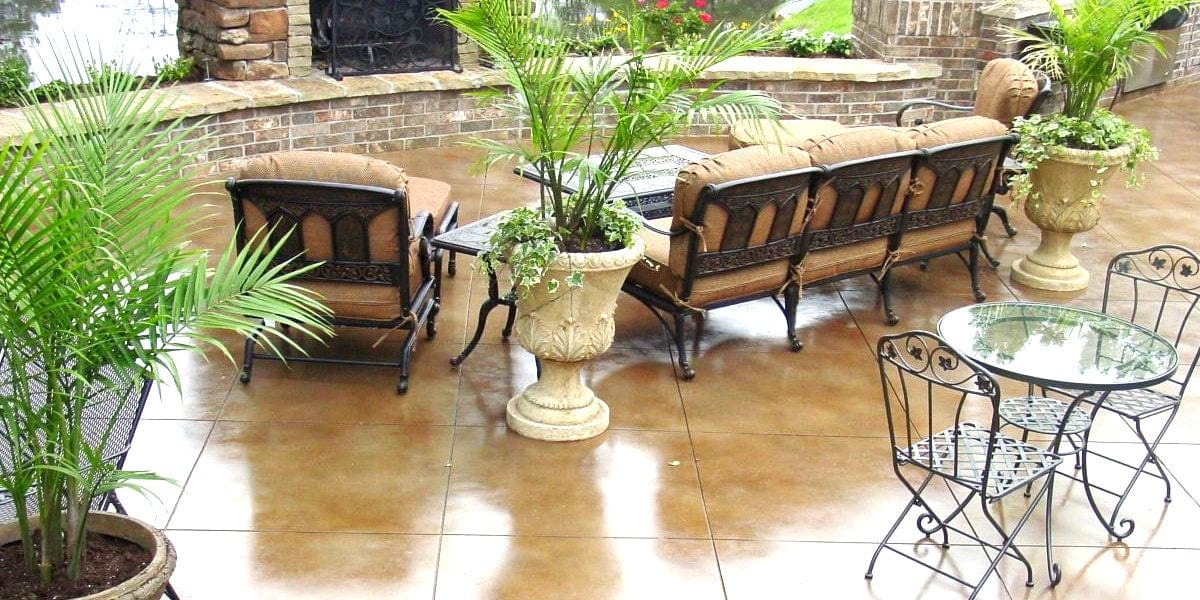
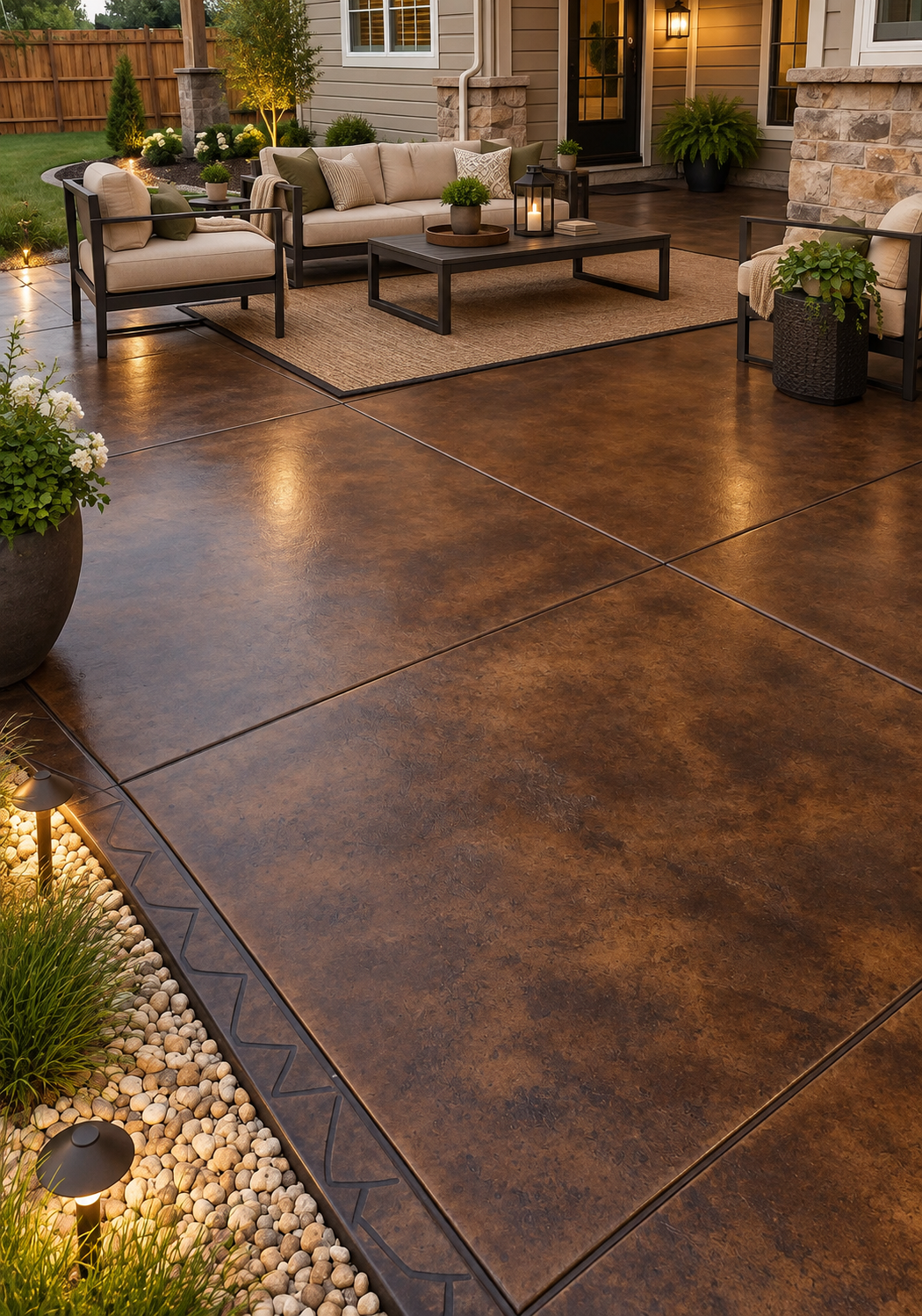
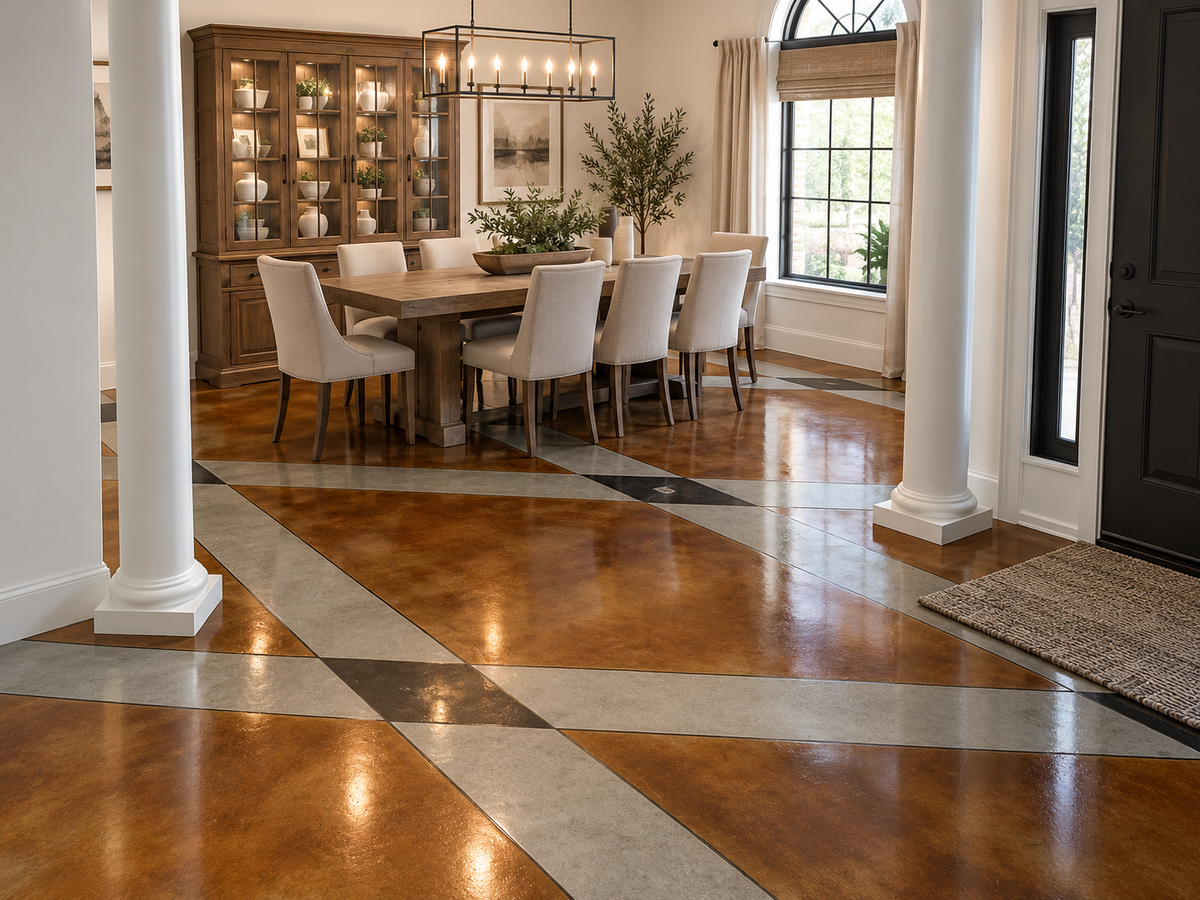
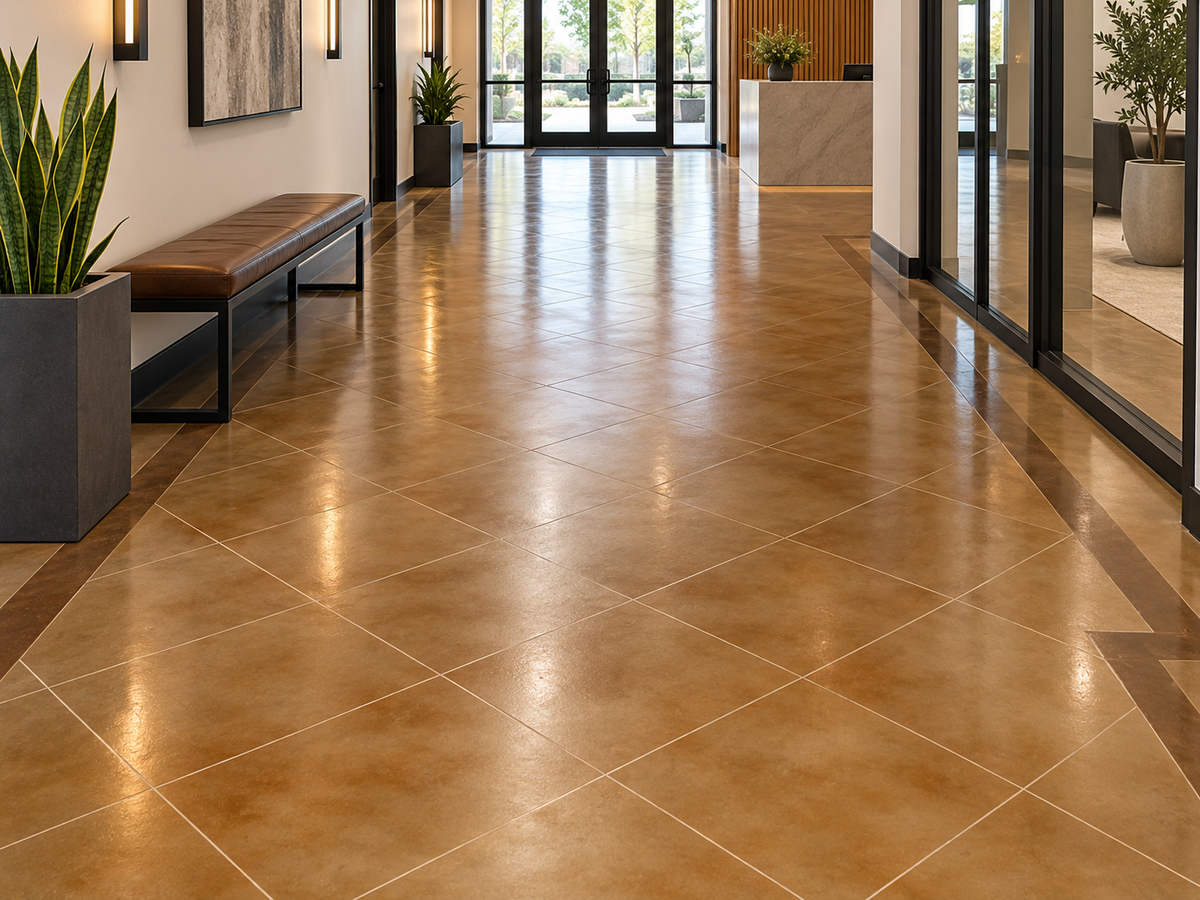
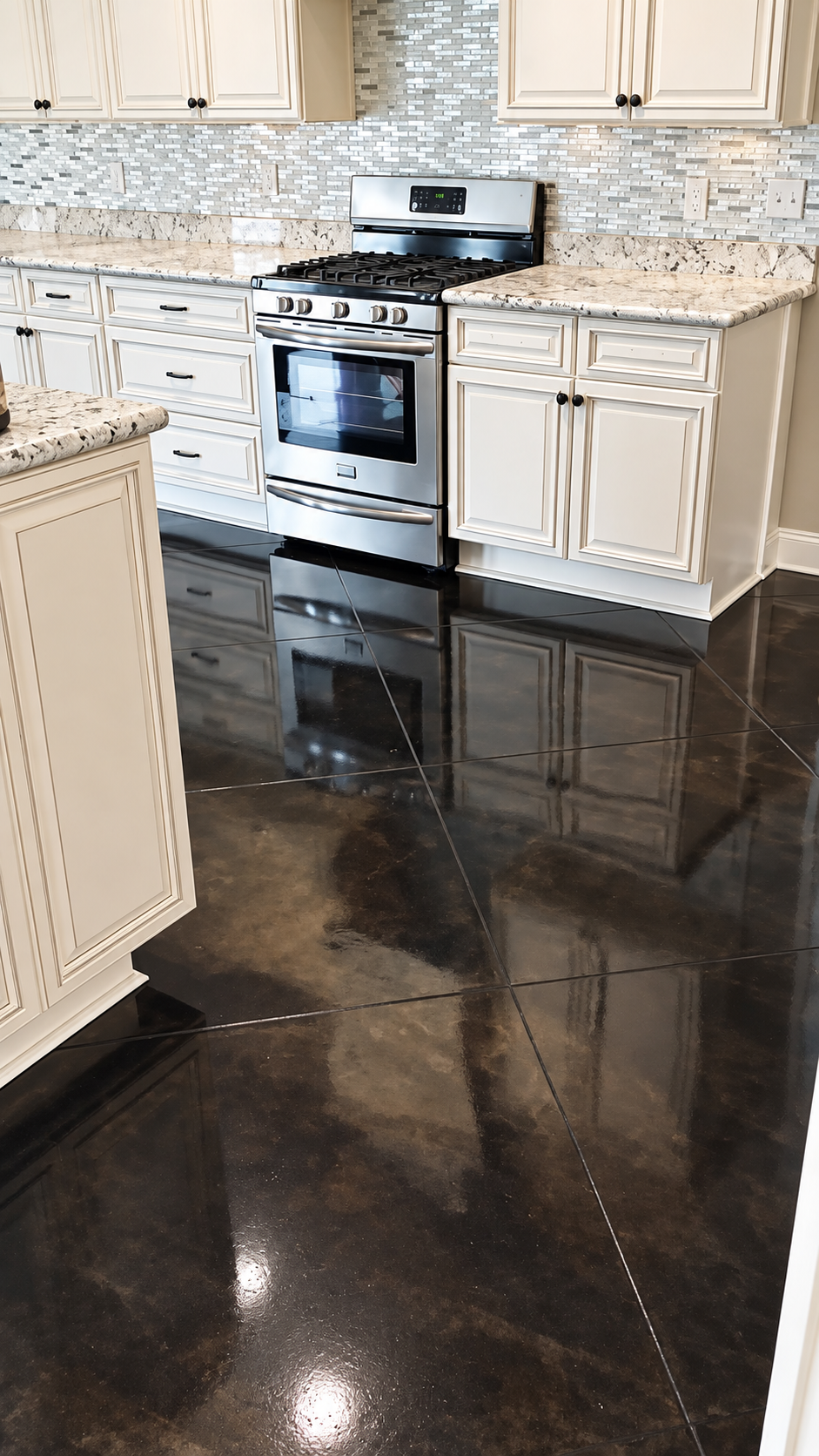
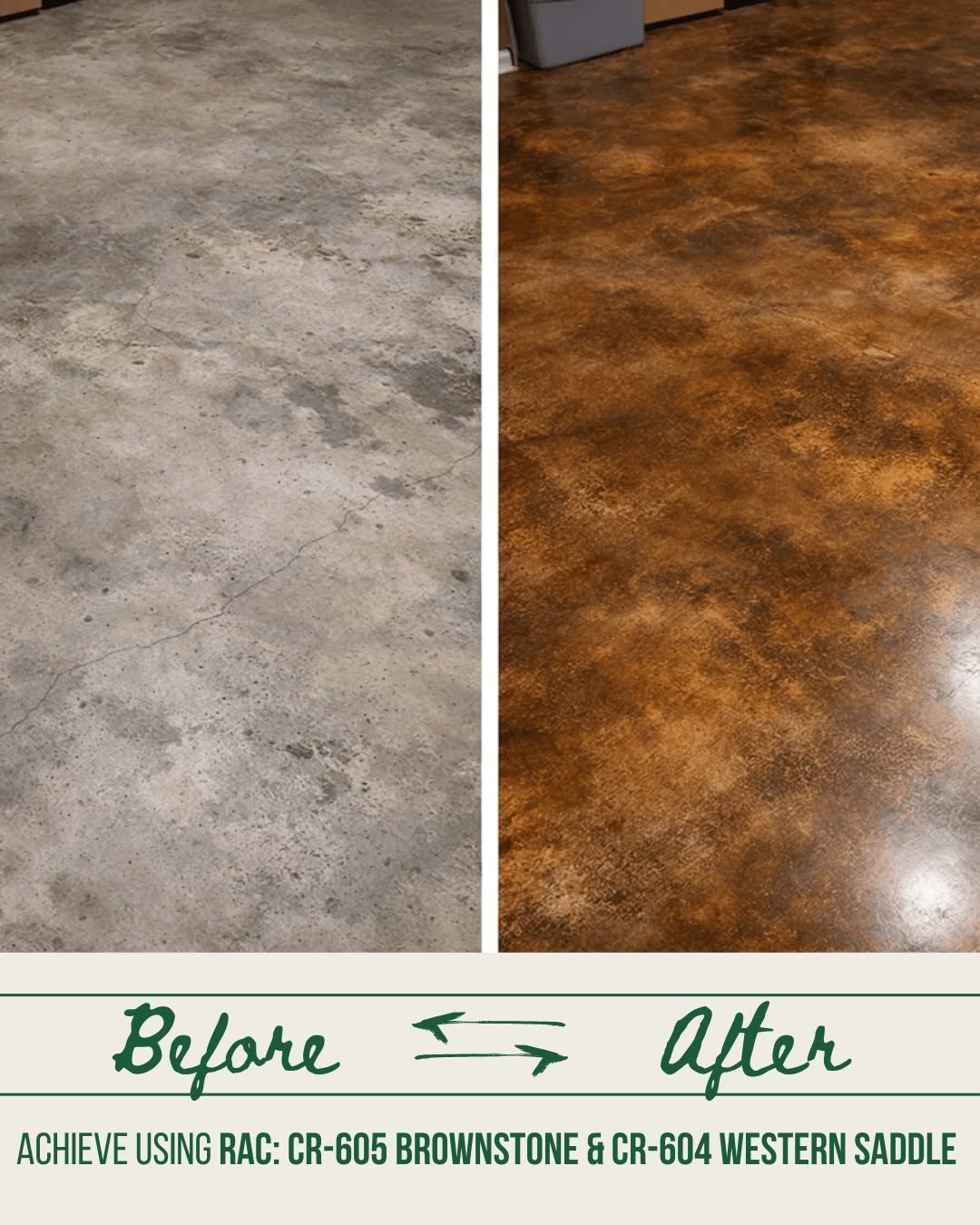
Create rich, one-of-a-kind color with RAC Reactive Acid Chemical Concrete Stain. This professional-grade concrete acid stain chemically reacts with minerals in cured concrete, producing translucent, variegated color that becomes part of the concrete itself.
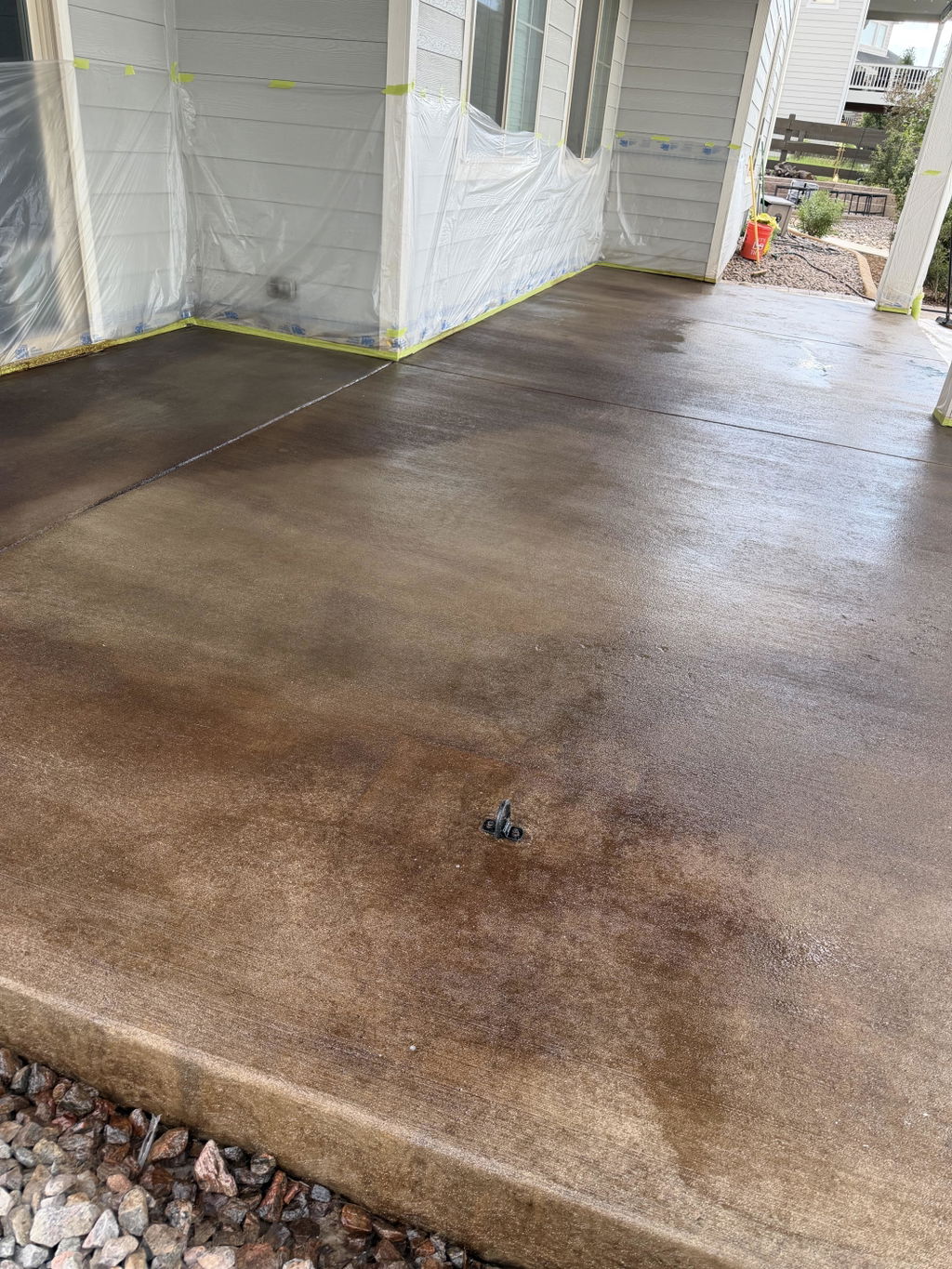
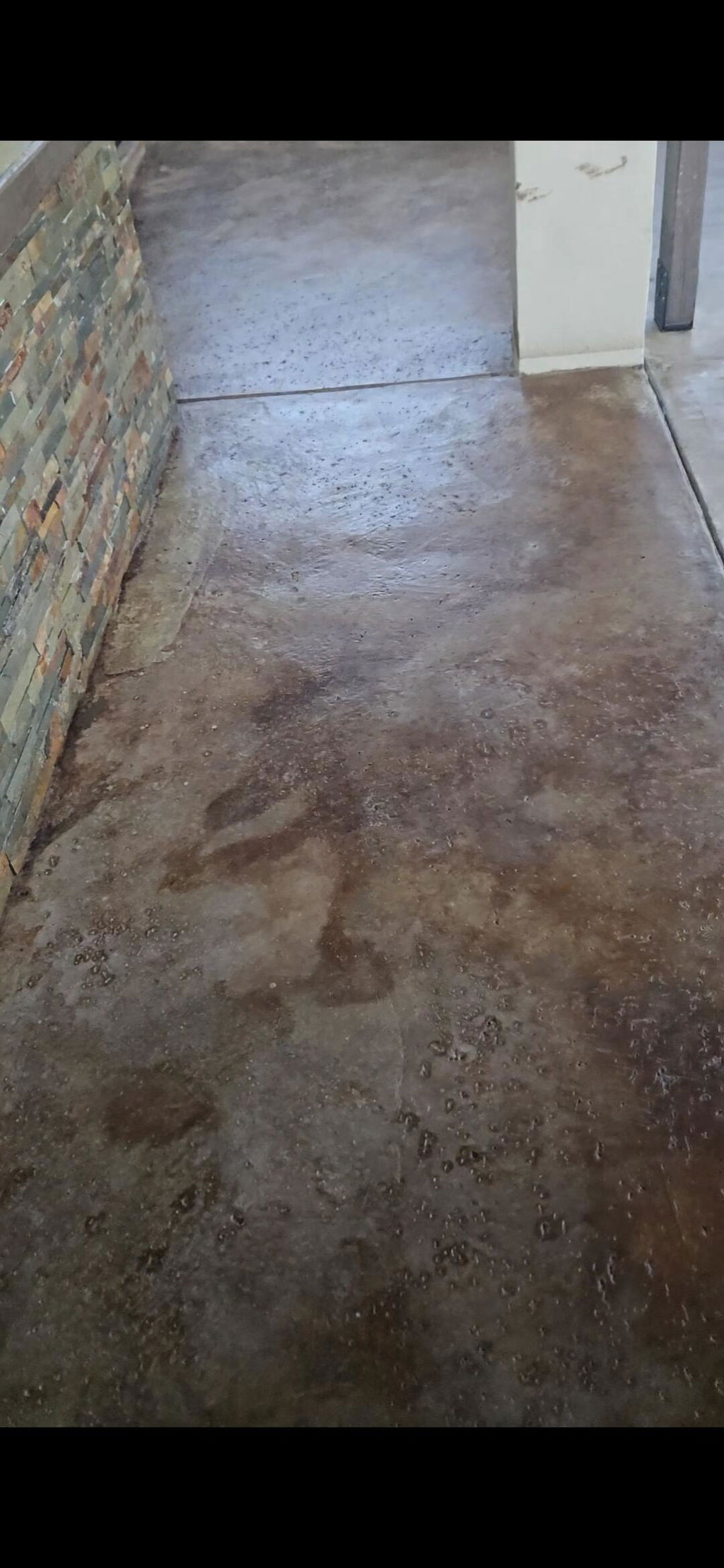
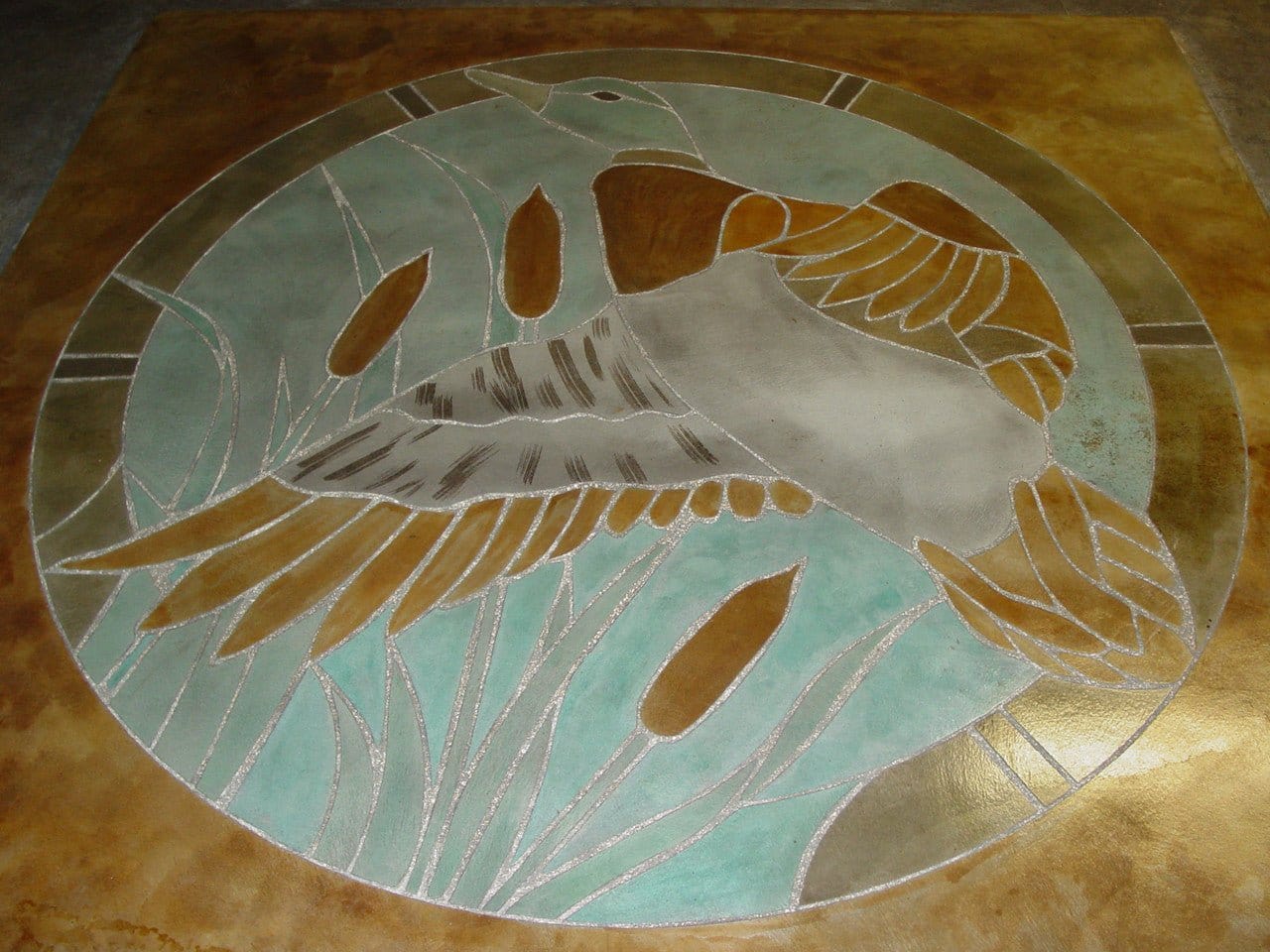
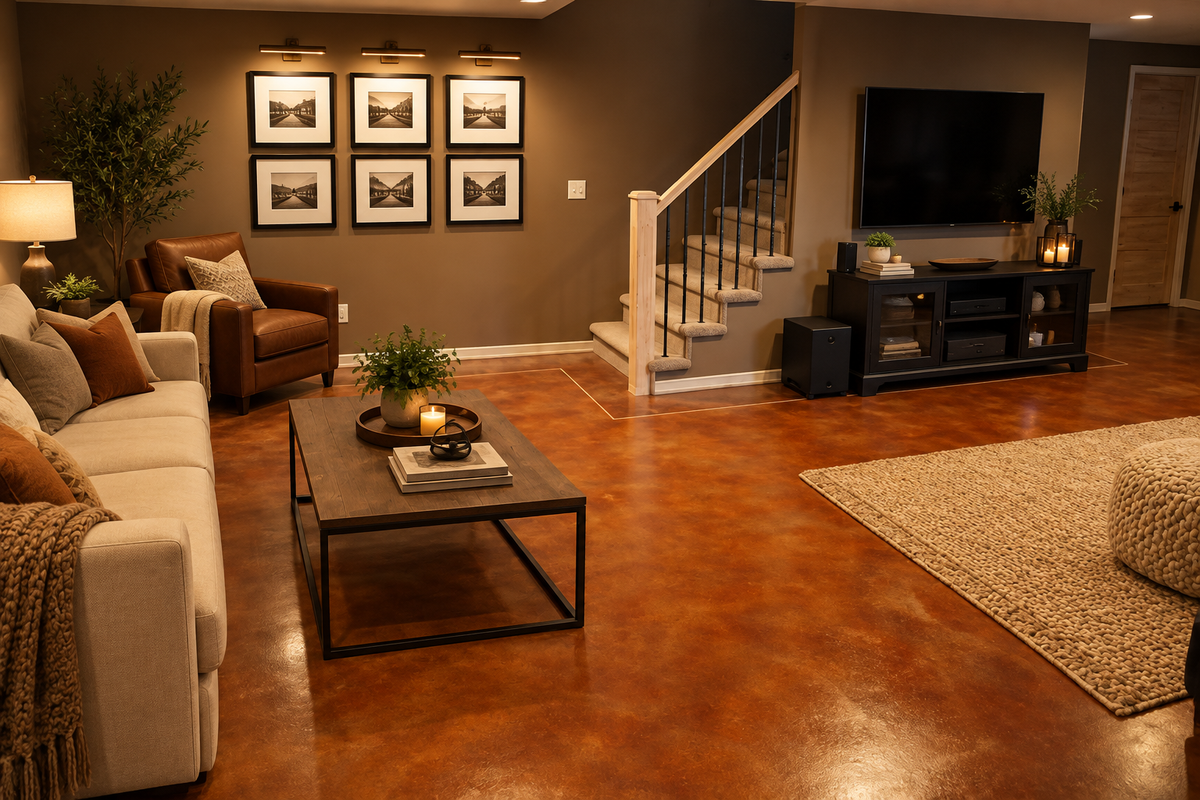
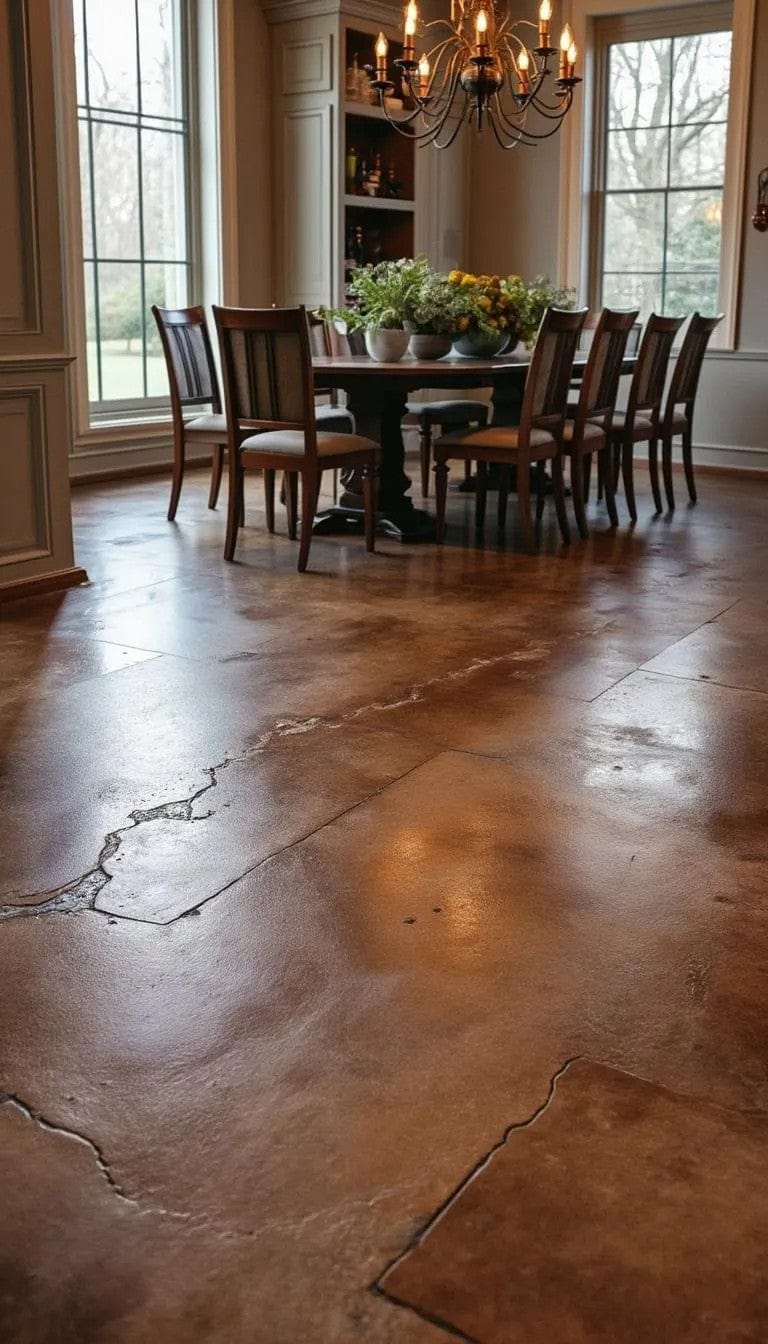
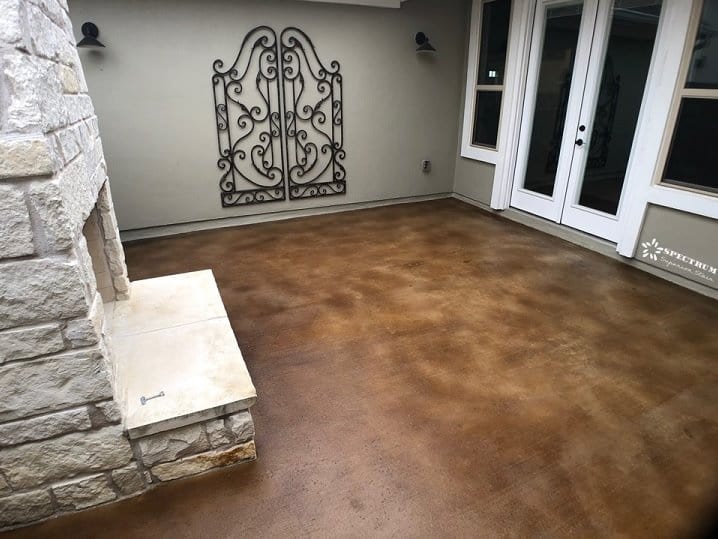
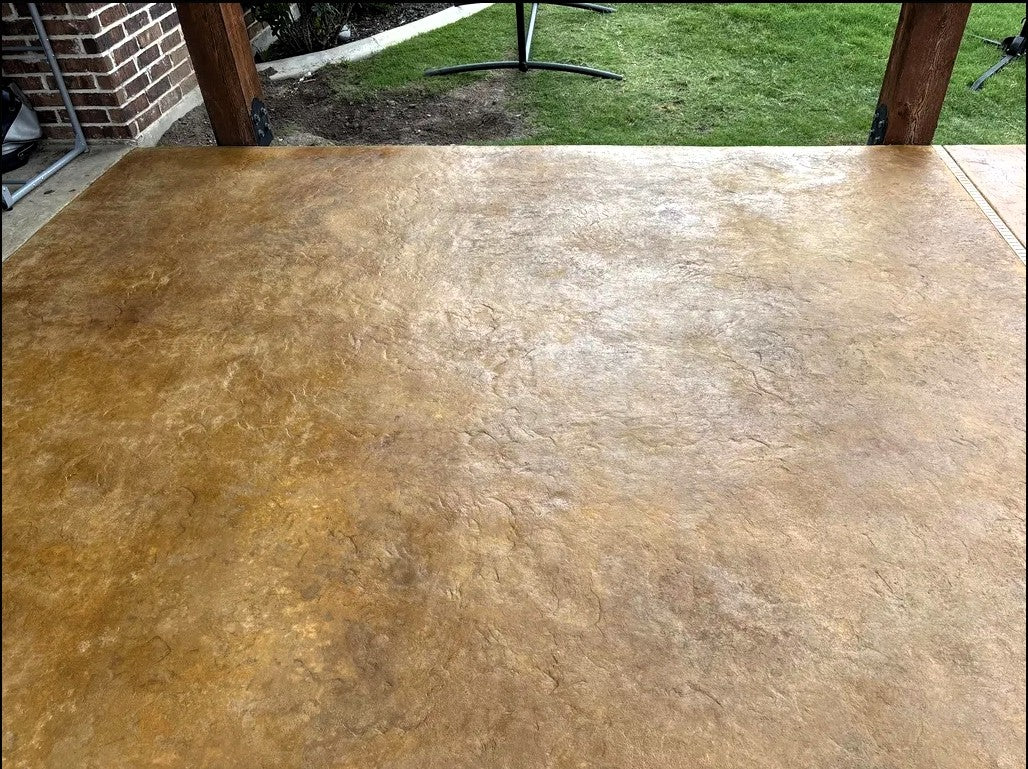
Unlike paint or opaque coatings, RAC enhances the natural character of the concrete, creating distinctive marbled, mottled and stone-like effects that vary from surface to surface.
Ideal for interior and exterior concrete floors, patios, pool decks, walkways, driveways and decorative concrete projects.
Why Choose RAC?
-
Chemically reacts with concrete for unique, lasting color
-
Creates natural marbled and variegated effects
-
Translucent finish lets the character of the concrete show through
-
UV-stable for interior and exterior applications
-
Colors can be layered and blended for custom effects
-
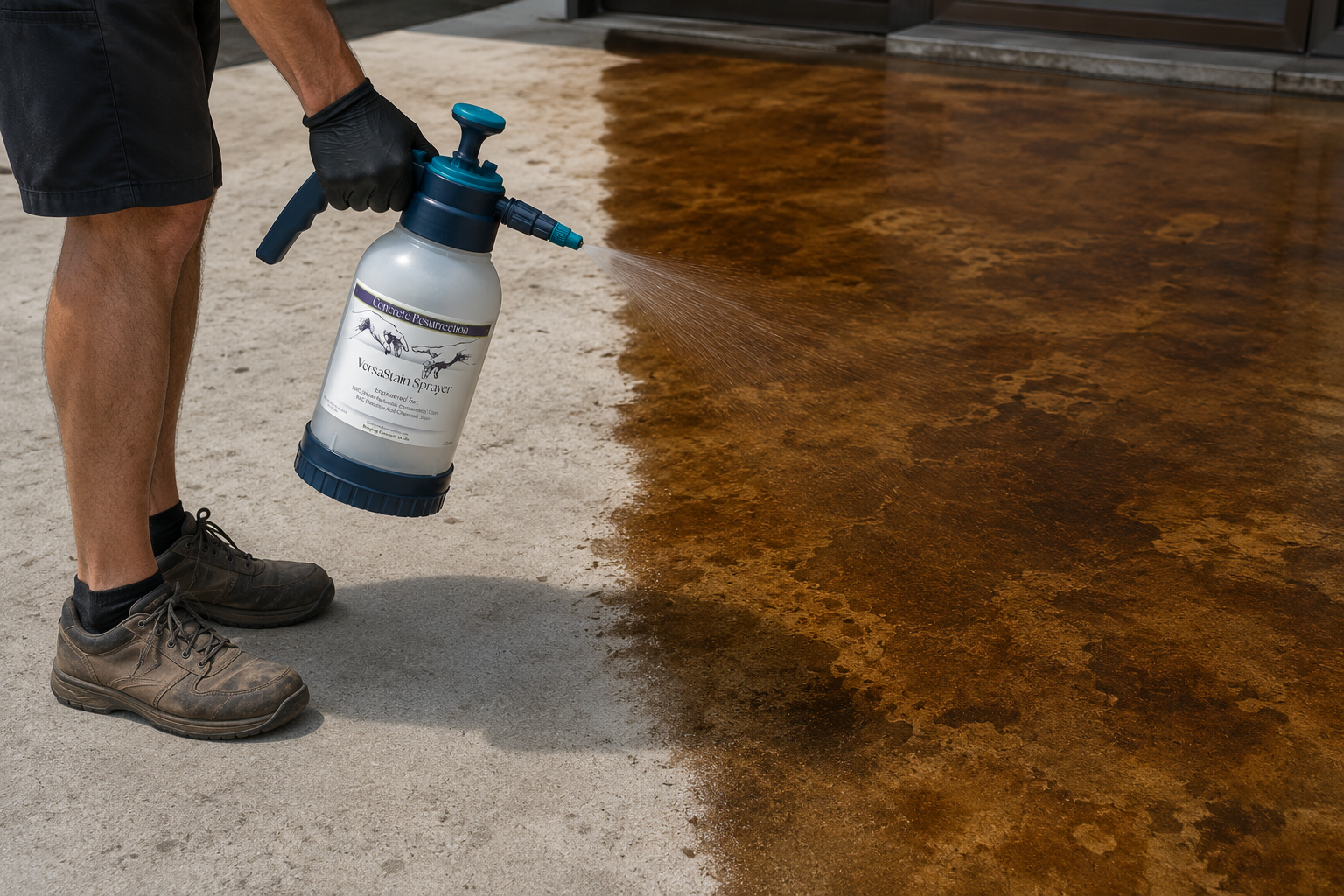
Apply with the VersaStain Sprayer, brush, sponge or rag
-
Approximately 100–200 sq. ft. coverage per gallon
-
Professional-grade formula
-
Proudly made in the USA
No Two Concrete Surfaces Are the Same
RAC reacts with the minerals already present in your concrete. The age, composition, texture, porosity and preparation of the slab all influence the final color.
This natural variation is what gives acid-stained concrete its distinctive character.
Always test your selected color on your concrete before completing the entire project.
For preparation, application, dilution, neutralization and sealing instructions, see the FAQ below.
Choose options
Need help?
Frequently Asked Questions
Concrete Resurrection RAC Reactive Acid Chemical Stain is a reactive concrete stain that creates natural, variegated color by chemically reacting with minerals in the concrete.
Unlike paint or a solid-color coating, RAC becomes part of the concrete surface and produces unique variations in color, tone, and movement. No two floors or slabs will look exactly alike.
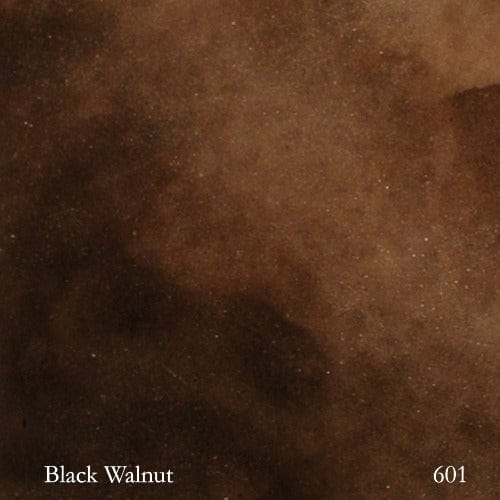
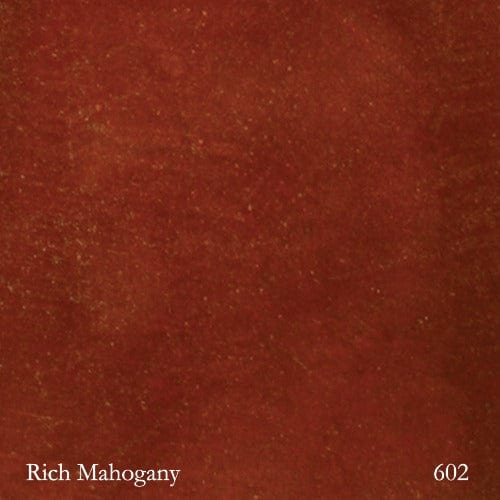
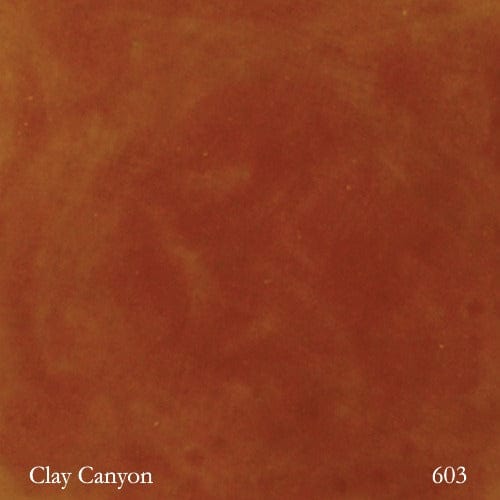
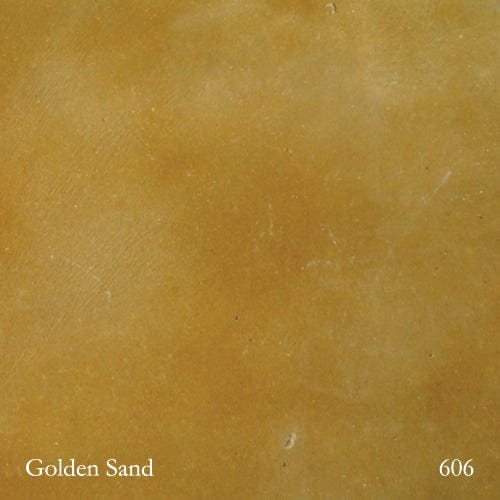
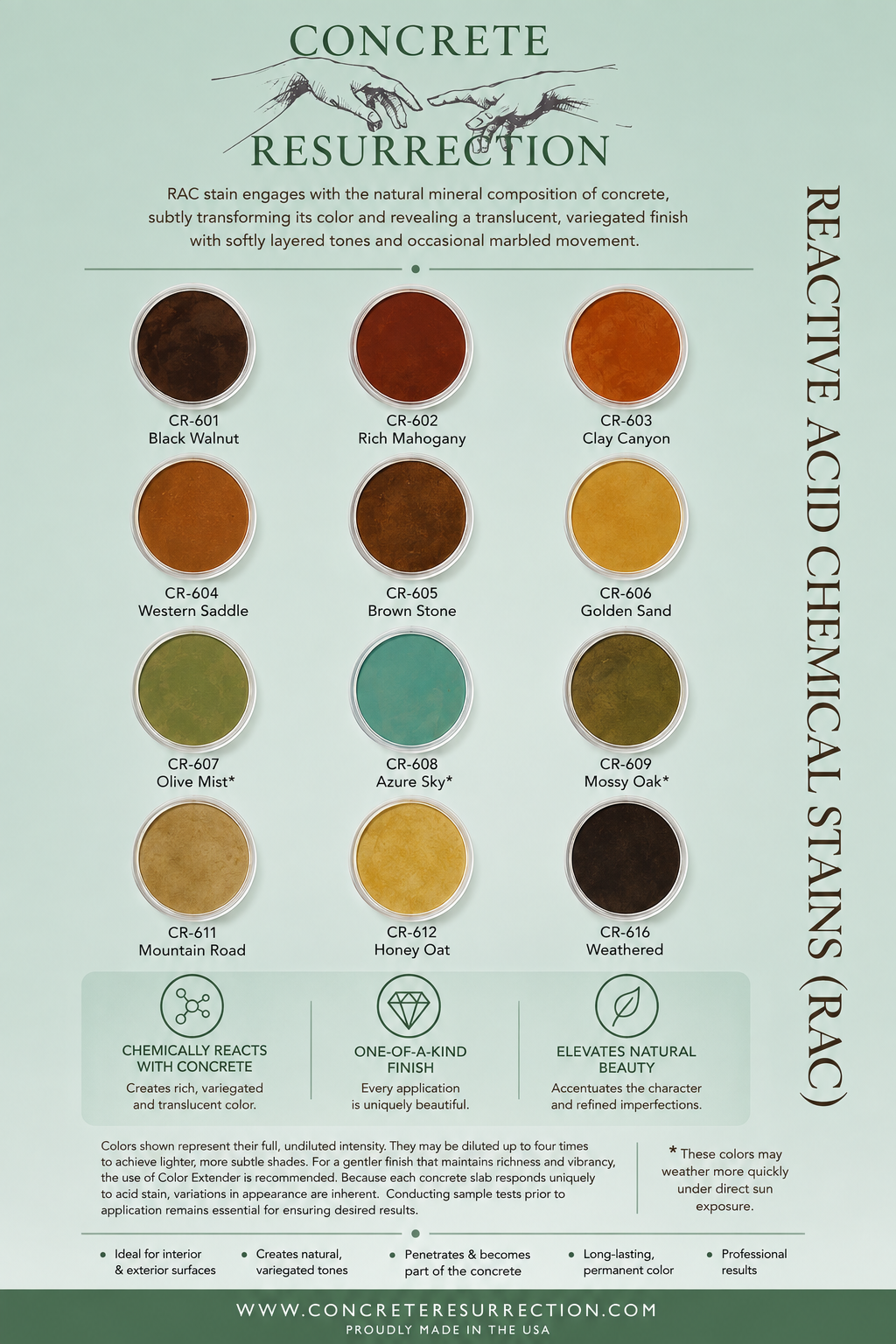
RAC is a reactive stain, so the final color cannot be determined by the liquid color in the bottle or by a color chart alone.
The finished appearance will vary depending on the concrete's age, composition, porosity, finishing method, previous treatments, and how strongly the stain reacts with the surface.
Expect natural variation, mottling, lighter and darker areas, and movement throughout the concrete—these variations are part of the beauty of acid-stained concrete.
DIY Tip: Always perform a test area on the actual concrete before staining the entire project.
Proper preparation is extremely important. RAC needs to come into contact with clean, porous concrete in order to react.
Remove dirt, grease, oil, wax, paint, adhesives, curing compounds, sealers, and other contaminants.
The concrete should readily absorb water rather than bead on the surface.
Avoid preparation methods that leave residues or close the pores of the concrete. Your goal is clean, open concrete that will allow the stain to penetrate and react.
Try a simple water test.
Sprinkle or spray clean water in several areas of the concrete. The water should soak into the surface and darken the concrete.
If the water beads or sits on top, there may be a sealer, coating, curing compound, or contaminant preventing penetration.
Also watch for areas that absorb water differently. Those areas may accept the stain differently and create variations in the finished color.
Once the concrete is properly prepared and completely dry, apply RAC evenly using an acid-resistant pump-up sprayer.
Work systematically across the surface and maintain a consistent application. Avoid leaving puddles or excessively heavy areas.
Allow the stain to react with the concrete according to the product instructions.
Remember that RAC is designed to create a naturally varied appearance. It should not look like a perfectly uniform painted surface.
Yes. A second application can be used when additional color development or variation is desired.
Allow the first application to complete its reaction before evaluating the color and deciding whether another application is needed.
Keep in mind that acid stain reacts differently with every slab, and additional stain will not necessarily make every area uniformly darker.
Concrete varies—even within the same slab.
Differences in cement content, finishing, porosity, age, previous treatments, repairs, or contaminants can cause RAC to react more strongly in some areas than others.
If an area has little or no reaction, check whether the concrete is accepting water. A remaining sealer, coating, curing compound, or contaminant may be preventing the stain from reaching the concrete.
Natural variation is expected with reactive acid stain.
Yes. After RAC has completed its reaction, the surface needs to be neutralized and thoroughly cleaned before sealing.
Use Concrete Resurrection CR-585 Surface Neutralizer according to its instructions.
Neutralizing stops the acidic reaction and helps prepare the concrete for the sealer.
Easy DIY rule:
Stain → Let it React → Neutralize → Clean & Rinse → Dry → Seal
After the stain has finished reacting, apply CR-585 Surface Neutralizer according to its instructions.
Scrub the floor thoroughly to loosen stain residue, then rinse and remove the dirty water. Additional cleaning and rinsing may be necessary.
Continue until the surface is clean and free of loose residue.
Allow the concrete to dry completely before applying sealer.
Don't panic. RAC-stained concrete can look very different before it is cleaned and sealed.
After the reaction, residue remaining on the surface can make the floor look dull, chalky, or muted. Proper neutralizing and cleaning removes this residue.
Applying the appropriate sealer will also enhance the color and bring out much more of the depth and character of the stained concrete.
Yes, sealing is strongly recommended.
The sealer protects the stained concrete and enhances the color and appearance created by the RAC stain.
Make sure the floor has been thoroughly neutralized, cleaned, rinsed, and allowed to dry completely before sealing.
Choose a Concrete Resurrection sealer appropriate for your interior or exterior application and desired finished appearance.
The concrete must be completely dry before applying your sealer.
Drying time varies depending on temperature, humidity, airflow, concrete porosity, and how much water was used during cleanup.
Do not rush this step. Trapped moisture can interfere with some sealers and may contribute to cloudiness, blushing, or adhesion problems.
Yes. RAC can be used to create naturally variegated color on suitable exterior concrete.
For exterior projects, choose a Concrete Resurrection exterior sealer that is compatible with acid-stained concrete.
Remember that exterior concrete can vary significantly because of weathering, previous sealers, exposure, and finishing differences, so a test area is especially important.
No. RAC is a translucent reactive stain, not an opaque coating.
Cracks, patches, repairs, aggregate exposure, finishing marks, and other characteristics of the concrete may remain visible—and may accept the stain differently from the surrounding concrete.
If you like the natural character of concrete, this variation can become part of the finished design.
A test area is the best way to see how RAC will react with your particular concrete.
Color charts and samples are helpful for choosing a general color direction, but they cannot predict the exact result because acid stain reacts with the minerals present in each individual slab.
Test in an inconspicuous area and take the test through the entire process—including neutralizing, cleaning, drying, and sealing. The sealed test area will give you the best idea of the final appearance.
For a DIY RAC project, think:
Prep → Test → Apply RAC → Let it React → Neutralize → Rinse & Clean → Let Dry Completely → Seal
The two biggest keys to a successful RAC project are proper surface preparation before staining and thorough neutralizing and cleaning before sealing.