How To Apply Acid Stain To Concrete Floors
RAC APPLICATION GUIDE
Acid Stain Creates a Reaction—Not a Paint Layer
Reactive Acid Chemical (RAC) stain reacts with minerals already in cured concrete to create translucent, marbled color. The preparation, neutralizing, and cleanup steps matter just as much as application, and every slab develops its own natural variation.
QUICK TAKEAWAY
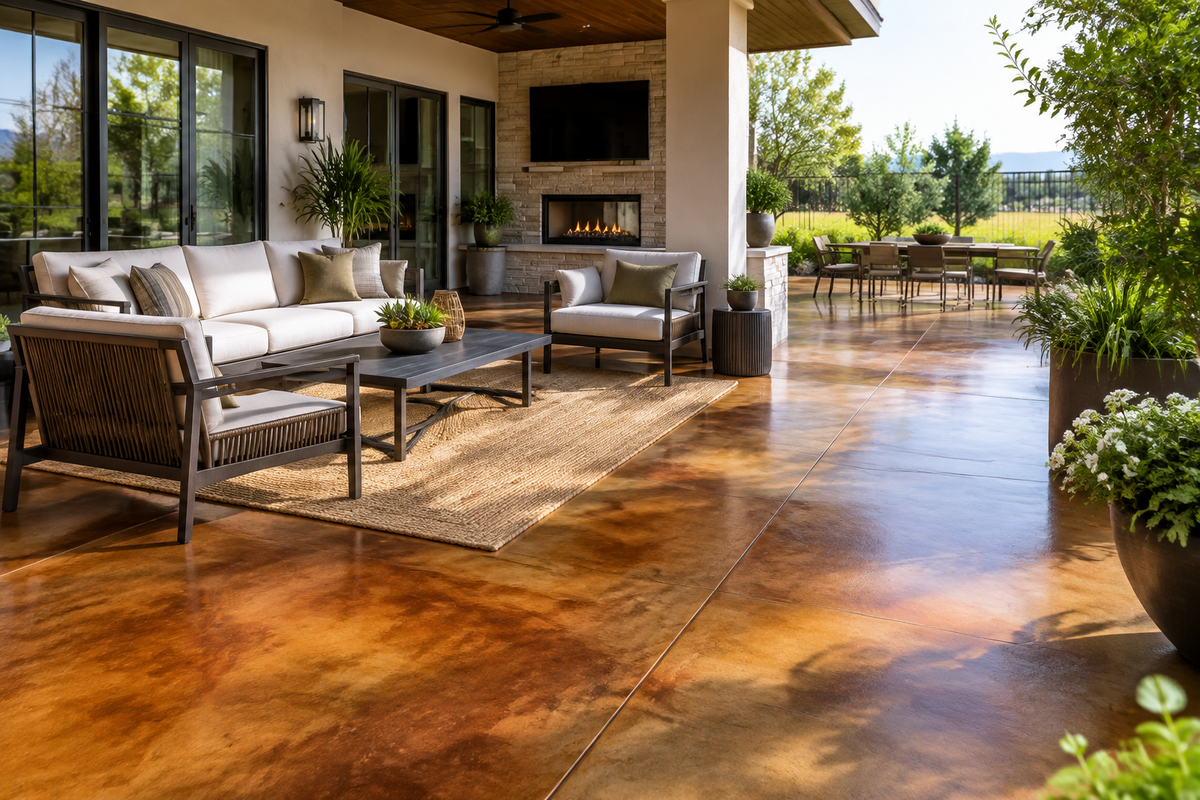
RAC does not cover the concrete—it reacts with it. Expect natural color movement, mottling, and variation. The best results come from clean, porous concrete, a test area, patient application, complete neutralization, and the right protective sealer.
What Makes RAC Acid Stain Different?
It reacts with the slab
RAC reacts with minerals in cured concrete, creating color within the surface instead of laying an opaque coating on top.
Every floor is unique
Concrete age, texture, repairs, mineral content, and previous exposure all influence the final result.
The reaction color is temporary
Do not judge the final color while the stain is reacting. The true result appears after residue is neutralized and rinsed away.
BEFORE YOU BEGIN
Gather your system—not just the stain
Plan for RAC stain, an acid-resistant applicator, gloves and protective eyewear, plastic and tape to protect nearby areas, a stiff brush, clean rinse water, CR-585 Surface Neutralizer, and a compatible sealer.
How to Apply Acid Stain to Concrete
Clean and check porosity
Remove dirt, oil, old sealer, paint, and residue. Test with water: if water beads instead of absorbing, the surface needs proper preparation before staining.
Test and protect
Apply a sample in an inconspicuous area and take it through the full process. Cover walls, baseboards, plants, and metal fixtures before beginning.
Apply in controlled passes
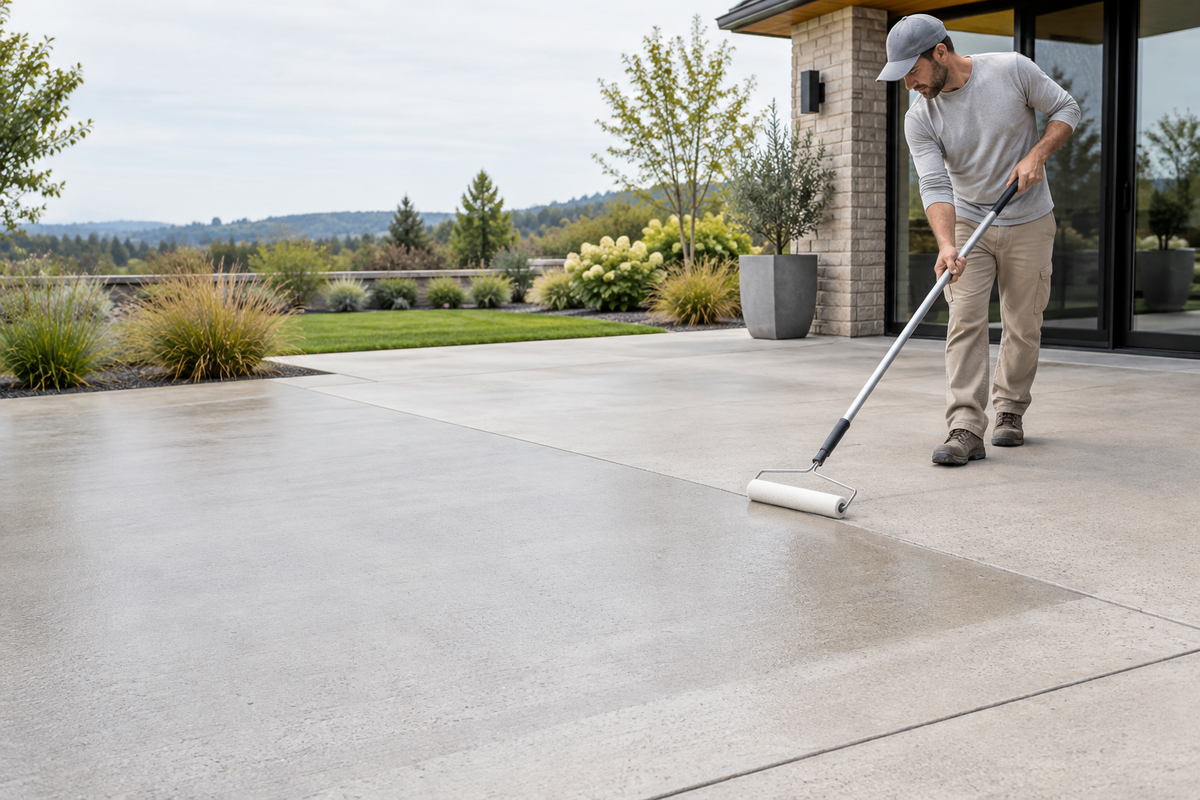
Use slow, overlapping passes and work in manageable sections. Keep a wet edge, avoid puddles, and use light circular movement for organic variation.
Allow the reaction
Give the stain about 4–5 hours to react. Temperature and humidity affect timing. The residue on top is not the final finished color.
Neutralize, scrub, and rinse
Neutralize the reaction with CR-585, scrub away residue, and rinse thoroughly. Continue until rinse water runs clear or a white cloth shows little to no color transfer.
Dry completely, then seal
Once the slab is fully dry, apply a compatible sealer. The wet look after cleanup is a good preview of how acrylic sealer will enhance the finished color.
Choose the Right Protection
Avoid these common mistakes
- Applying stain to sealed, contaminated, or non-porous concrete.
- Allowing stain to puddle or dry too quickly in direct sun.
- Skipping neutralization or leaving residue behind before sealing.
- Sealing before the concrete has dried completely.
Plan your project with confidence
RAC rewards patience and preparation. Use our project planners to build the right prep, stain, sealer, and application-tool system for your surface.
Plan an Interior Floor Plan an Exterior Project