What Is The Best Product To Remove Oil Stains From Concrete?
Oil stains penetrate concrete quickly because the material is porous, making older stains harder to remove. Fresh spills should first be absorbed with materials such as cat litter, sawdust, or baking soda. Concrete-specific degreasers can then break down petroleum-based residue, followed by dwell time, scrubbing with a non-metal brush, and thorough rinsing. Older stains may require repeated treatments. Different surfaces, including decorative, sealed, and interior concrete, may require adjustments to cleaning methods. Household products such as bleach are generally unsuitable. Sealing concrete afterward can reduce oil absorption and make future spills easier to clean.
Quick answer: For most oil stains on concrete, start with CR-580 Degreaser, give it time to work, scrub with a stiff brush, and rinse thoroughly. The sooner you treat a spill, the better your results will be.
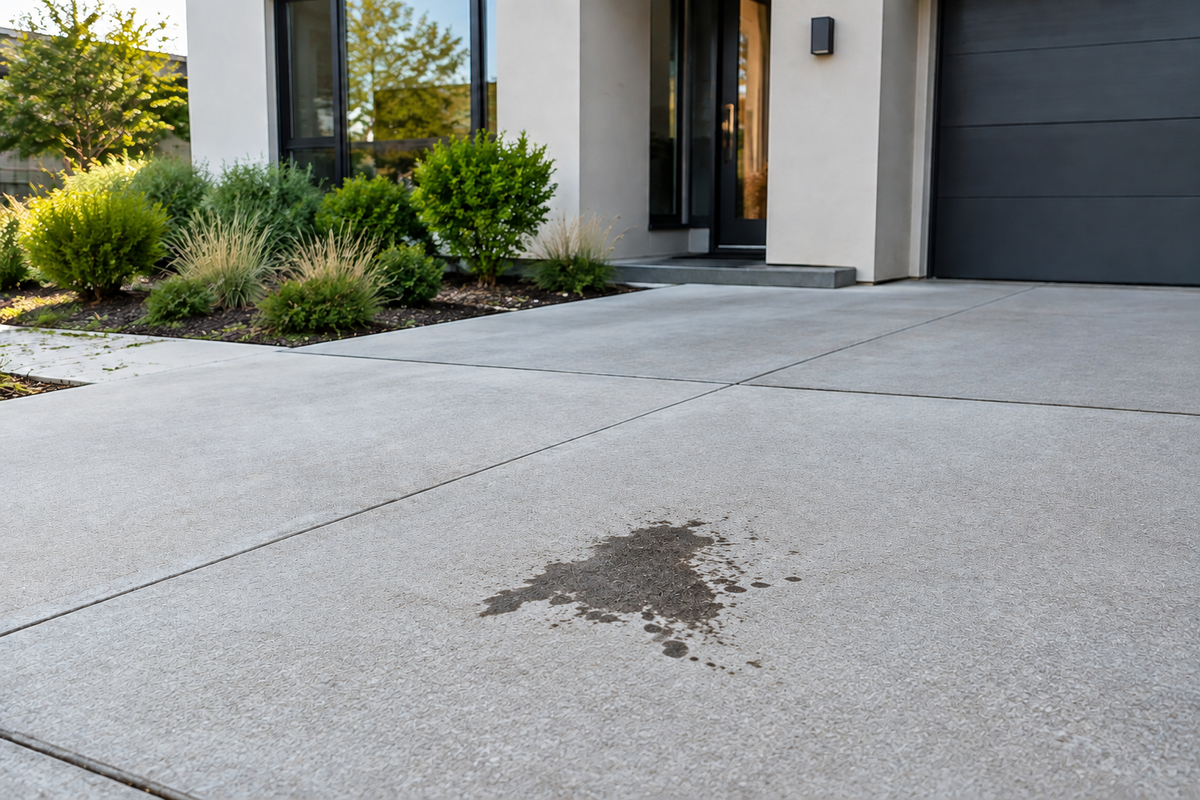
Oil stains are among the most frustrating marks to remove from concrete. They soak into the surface quickly and can leave a lasting shadow if they are not treated properly. The best approach depends on how long the stain has been sitting and whether the concrete is bare, sealed, or decorative.
Concrete Resurrection cleaning products give homeowners and professionals a reliable way to tackle stubborn oil marks while caring for the finish underneath.
Why oil stains are difficult to remove
Concrete is porous, so oil moves easily into its tiny surface pores. The longer a stain sits, the deeper it travels—which is why a fresh spill is always easier to address than an old stain that has baked into a driveway or garage floor. Direct sun can also help oil spread farther into the surrounding concrete over time.
Choose the right cleaner
For petroleum-based stains
CR-580 Degreaser
CR-580 is formulated to break down oil and other petroleum-based stains without stripping an existing sealer or decorative finish. It is a dependable choice for driveways, garage floors, and shop floors.
Shop CR-580 DegreaserFor light residue and routine care
Clean Living Essentials Multi-Surface Floor Cleaner
For lighter oil residue or general upkeep, this residue-free cleaner safely lifts everyday grime while helping protect sealed concrete surfaces.
Shop Floor CleanerFor a fresh spill: Cover it immediately with an absorbent material such as cat litter, sawdust, or baking soda. Let it sit for several hours, then sweep it away before following up with a concrete cleaner.
How to remove an oil stain from concrete
- 1Absorb what you can. For fresh spills, cover the area with an absorbent material and let it sit for several hours before sweeping it away.
- 2Apply degreaser. Spread CR-580 evenly over the stained area, extending slightly beyond the visible stain to catch any oil that has spread.
- 3Let it dwell. Give the degreaser the recommended time to break down the oil before scrubbing. Rushing this step reduces its effectiveness.
- 4Scrub with a stiff brush. Work the product into the surface with a non-metal brush to help protect sealed or decorative concrete.
- 5Rinse thoroughly. Flush the area with clean water to remove all cleaner and loosened residue.
- 6Repeat if necessary. Older, deeply set stains may need more than one treatment cycle before they lift fully.
What about household cleaners?
Dish soap, kitchen degreasers, and bleach can sometimes lighten a fresh stain, but they are not formulated for porous concrete. They may leave residue that attracts dirt or interferes with a future sealer application.
A concrete-specific product such as CR-580 Degreaser is designed to work with the surface rather than against it.
Caring for different concrete surfaces
Stamped and decorative concrete need a gentler touch to help preserve their color and texture, while a plain garage floor can often handle more aggressive scrubbing. When cleaning an interior floor, make sure the space has good ventilation.
If you are unsure how a cleaner will affect a decorative surface, test it in a small, inconspicuous area first.
Prevent future oil stains
A quality sealer is the most effective long-term defense against oil staining. A sealed surface slows penetration, giving you more time to clean a spill before it becomes a permanent mark. Parking mats or drip trays can also help in areas where vehicles are known to leak.
Concrete Resurrection cleaning products are manufactured in the USA, and our team can help you choose the right product for your specific stain and surface.
Need help with a stubborn oil stain?
Our team can help you match the right cleaner and process to your concrete surface.
Contact Our Team