
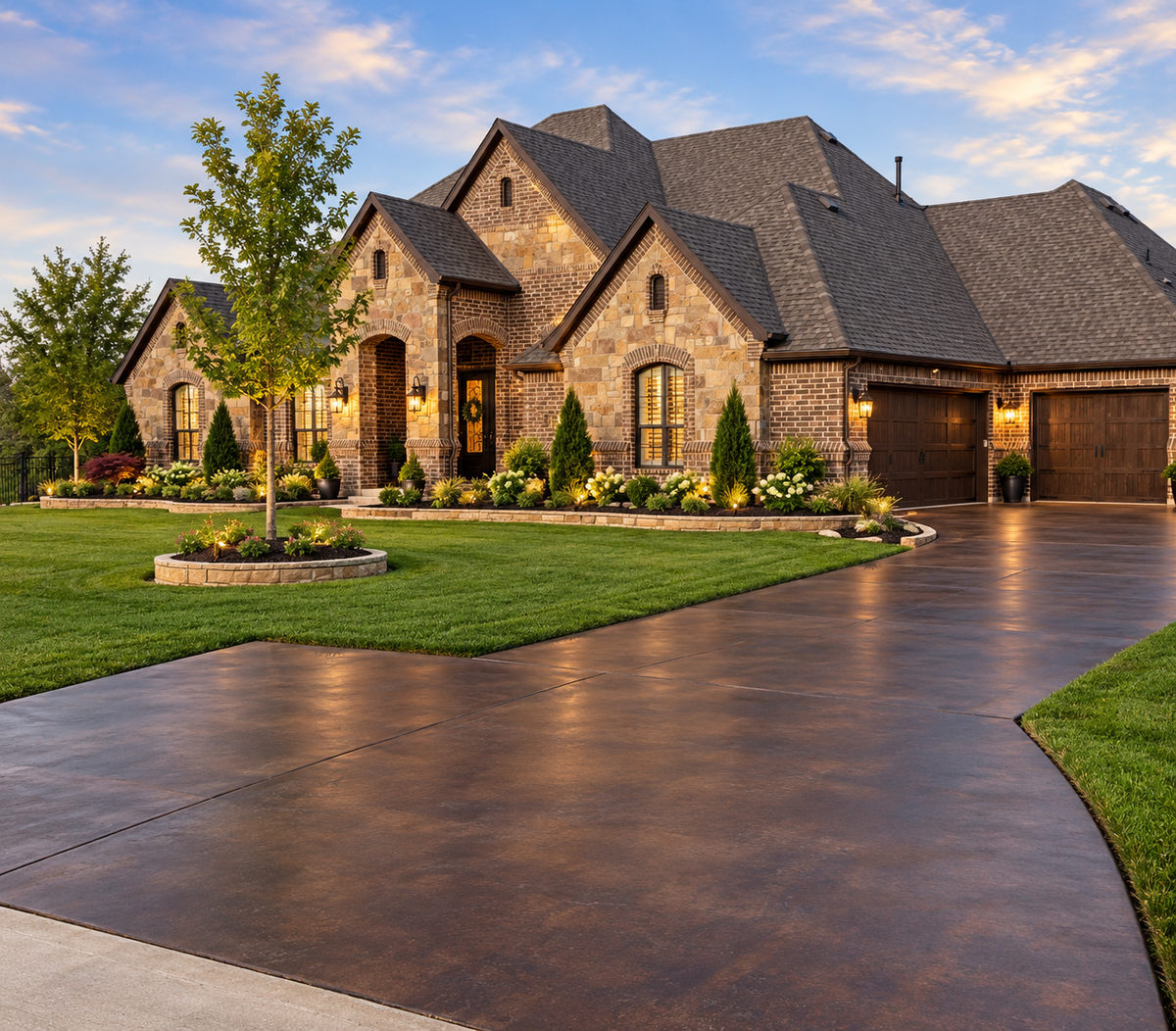
Top 11 Acid Stain Concrete Floor Colors For Custom Decorative Finishes
Acid stain creates distinctive concrete floors through a chemical reaction with minerals in the slab, producing translucent, variegated patterns. Available colors range from deep browns and warm terracotta tones to sandy shades, green-gray blends, and cool blues and grays. The final appearance varies based on the concrete’s age, porosity, mineral composition, lighting, and surface condition, so sample testing is recommended before application. Proper spraying helps create an even, natural pattern, while sealing protects the finished color from moisture, wear, and UV exposure. Color selection should complement the space’s lighting, decor, and overall design style.
What makes acid stain special: Reactive Acid Chemical (RAC) Stain creates rich, translucent color with natural movement and marbling. Because it reacts with the minerals in each slab, no two acid-stained floors will look exactly alike.
Few decorative concrete finishes create the depth and character of a true acid stain. From warm browns to sandy neutrals and unexpected greens or blues, acid stain turns ordinary concrete into a one-of-a-kind surface with lasting personality.
Our Reactive Acid Chemical (RAC) Stain gives homeowners and contractors a wide palette for custom decorative finishes.
How acid stain differs from other concrete stains
RAC works differently than a standard pigmented stain. Rather than sitting on top of the concrete like paint, it reacts chemically with minerals naturally present in the slab. The result is translucent, variegated color that becomes a permanent part of the concrete.
The concrete's age, mineral composition, porosity, and preparation all influence the final color. That natural variation is what gives acid-stained concrete its distinctive, marbled appearance.
Always sample first. A color chart is an approximate guide—not an exact prediction. Test your chosen stain on an inconspicuous area of the actual floor, or on a sample slab from the same pour, before staining the full project.
11 acid stain colors to explore
Use these color families as a starting point, then let a test sample guide your final choice.
Rich & grounding
Browns and warm neutrals
Black Walnut — Deep, rich brown with subtle variation.
Rich Mahogany — Reddish-brown warmth for interiors with wood furnishings.
Western Saddle — Natural medium tan-brown beside stone and wood exteriors.
Brownstone — Cooler, muted brown for modern or traditional spaces.
Warm & light
Earthy and sunlit tones
Clay Canyon — Warm terracotta for patios and walkways.
Golden Sand — Soft sandy color that brightens patios and pool decks.
Honey Oat — Light golden tan for a softer, brighter finish.
Mountain Road — A cool beige starting point for modern or industrial spaces.
Natural & distinctive
Greens and blue
Olive Mist — A subtle green for a less common decorative floor.
Mossy Oak — Deep green-brown that feels at home near stone and landscaping.
Azure Sky — Subtle blue for statement floors and accent areas.
Mountain Road note: On some concrete, Mountain Road can develop into a very dark brown. A sample application is especially important for this color.
Choosing a color for your space
Darker shades such as Black Walnut and Rich Mahogany can create a grounded look and visually conceal everyday dust and wear.
Golden Sand and Honey Oat can help create a lighter, more open feeling.
Warm colors suit rustic spaces, while cooler options such as Mountain Road and Azure Sky create a more contemporary backdrop.
Getting the best acid stain results
- 1Test your color. Make a sample on the actual concrete before committing to the full floor.
- 2Prepare the surface thoroughly. A clean, open concrete surface allows the stain to react more evenly.
- 3Apply evenly. A dedicated concrete stain applicator helps distribute RAC evenly for the natural movement acid stain is known for.
- 4Neutralize, rinse, and seal. After the stain has reacted and residue is neutralized, choose the right protective sealer for the location and look you want.
Your sealer affects the final look
Deepens and enriches the stain the most for a stronger, more dramatic tone.
Provides a moderate color boost while enhancing and protecting exterior concrete.
Offers protection with the least amount of color deepening.
Ready to plan your acid-stained floor?
Browse RAC colors, test a sample, and contact our team if you would like help choosing the right system.
Shop RAC Acid Stain Contact Our Team
%20Stain%20creates%20rich,%20translucent%20color%20with%20natural%20movement%20and%20marbling.%20Because%20it%20reacts%20with%20the%20minerals%20in%20each%20slab,%20no%20tw...)