How Often Should You Seal Exterior Decorative Concrete Surfaces?
Quick Summary
Exterior decorative concrete benefits from routine sealing that supports surface appearance, simplifies maintenance, and helps decorative finishes withstand changing environmental conditions. Most driveways benefit from resealing every two to three years, though the right schedule varies according to traffic, weather exposure, existing finish, and product type—from film-forming exterior acrylics to penetrating sealers like Weather Dance and Nature’s Essence. Understanding these factors helps homeowners create effective maintenance plans that preserve decorative concrete while supporting attractive outdoor spaces throughout years of everyday use.
Exterior decorative concrete experiences continuous exposure to sunlight, rainfall, temperature changes, and everyday foot or vehicle traffic throughout the year. Understanding how often to seal your concrete driveway helps homeowners maintain decorative finishes while supporting long-term appearance through routine maintenance and timely protective sealing.
As a general guideline, most exterior concrete benefits from resealing every two to three years, though high-traffic driveways, freeze-thaw climates, and surfaces exposed to intense sunlight often need attention sooner. Rather than relying on a fixed date alone, treat resealing as part of an overall maintenance routine and let the surface’s actual condition guide the schedule. Regular inspections allow homeowners to evaluate existing sealers, monitor decorative finishes, and plan maintenance before environmental exposure gradually affects the concrete beneath.
Several Factors Influence Resealing Frequency
Every decorative concrete surface performs differently because environmental conditions, traffic levels, and previous maintenance all influence the longevity of protective sealers. Driveways receiving frequent vehicle traffic generally experience greater wear than decorative patios or walkways used primarily for occasional outdoor gatherings and recreational activities.
Climate also plays an important role because repeated moisture, strong sunlight, seasonal temperature fluctuations, and freeze-thaw cycles may affect protective coatings at different rates. Evaluating these conditions regularly helps establish a practical resealing schedule suited to each decorative concrete installation.
Watch for Signs that a New Sealer is Needed
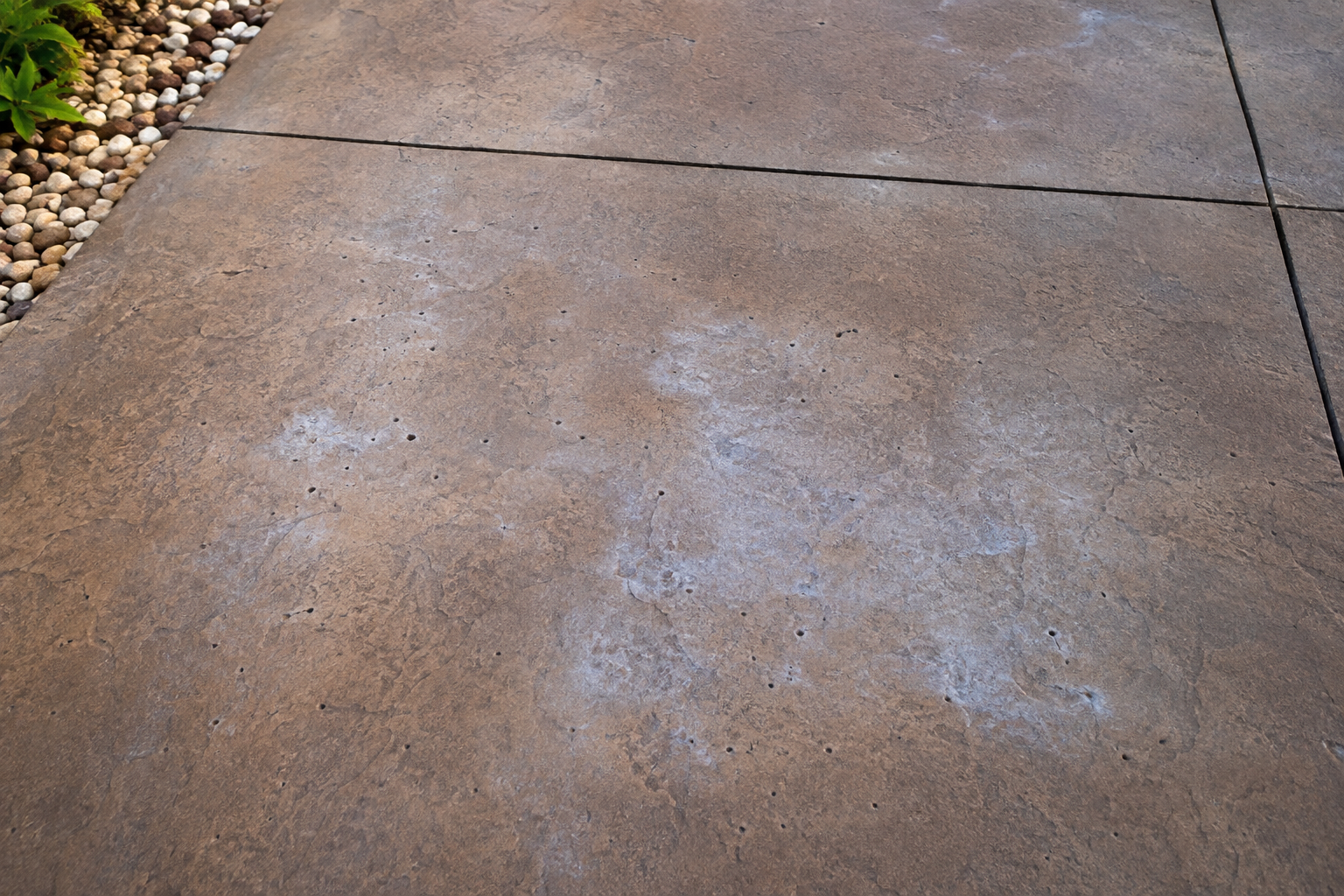
Visible changes across decorative concrete usually indicate that protective maintenance deserves attention before surface appearance declines further. Reduced water beading, dull decorative finishes, increased surface absorption, and gradual color changes commonly signal that existing protective coatings have begun losing their original effectiveness.
Routine inspections make it easier to identify maintenance opportunities before decorative surfaces experience greater environmental exposure. Addressing these signs promptly supports attractive outdoor concrete while helping preserve decorative finishes throughout changing seasonal conditions.
Choose a Sealer Designed for Exterior Conditions
Exterior decorative concrete benefits from sealers specifically developed for outdoor applications where sunlight, moisture, and changing weather continuously affect surface performance. Selecting compatible products creates a finishing system that complements decorative concrete while supporting easier routine maintenance across driveways, patios, walkways, and pool decks.
Outdoor decorative projects can successfully incorporate outside solvent based acrylic 400 VOC - multiple sizes available, creating a low-gloss protective finishing layer that enhances decorative concrete while supporting attractive exterior surface appearance. Matching the sealer to the intended environment contributes toward balanced long-term decorative performance. CR-560M can be added to the second coat of Outside Solvent Based Acrylic sealer for a satin or a matte finish.
Penetrating Sealers Offer Protection Without Changing the Look
When maintaining the concrete’s natural appearance is a priority, penetrating sealers protect from within rather than forming a surface film. Concrete Resurrection’s Weather Dance penetrates deeply and provides moisture resistance without changing the color of the concrete, making it well suited to driveways where preserving the original appearance matters. For acid-stained decorative surfaces, Nature’s Essence enriches existing tones—bringing out deeper, more vibrant color—while preserving the natural surface texture.
For driveways, the appropriate protective finish is always an exterior acrylic such as Outside Acrylic, which is built to handle the sunlight, moisture, and vehicle traffic driveways experience. High-build coatings like epoxy, urethane, or polyaspartic are not suited to driveways and should be reserved for garage floors, where they provide excellent abrasion resistance in a covered, controlled environment. Matching the product type to the driveway’s traffic and exposure supports the best long-term result.
Consider the Desired Finished Appearance
Protective sealers contribute more than surface maintenance because they also influence the finished appearance of decorative concrete. Some homeowners prefer richer color enhancement with additional sheen, while others appreciate a softer finish that highlights decorative textures without creating a reflective surface across outdoor living areas.
Projects seeking a more subtle decorative appearance may incorporate the matte additive for concrete resurrection outside acrylic CR-560/CR-561/CR-562, allowing exterior acrylic sealers to achieve a lower-sheen finish. Selecting suitable finishing options helps decorative concrete complement surrounding architecture, landscaping, and outdoor entertainment spaces.
Create a Routine Maintenance Schedule
Decorative concrete remains more attractive when maintenance follows a consistent schedule instead of responding only after noticeable surface wear develops. Regular sweeping, gentle cleaning, and seasonal inspections help reduce accumulated debris while allowing homeowners to evaluate the condition of existing protective sealers throughout the year. For routine cleaning, use only pH-neutral cleaners, such as Concrete Resurrection’s Clean Living Essentials Multi-Surface Floor Cleaner, to avoid damaging the sealer or dulling the finish.
Homeowners wondering how often should you seal concrete benefit from monitoring surface performance instead of relying exclusively on fixed timelines. Traffic levels, weather exposure, decorative finish condition, and routine maintenance all contribute toward determining the most appropriate resealing schedule for each installation.
Protect Decorative Concrete for Long-Term Beauty
Decorative concrete represents a valuable investment that continues enhancing outdoor living spaces through thoughtful maintenance and compatible protective products. Routine inspections, suitable sealers, and timely maintenance work together to preserve decorative color, attractive texture, and welcoming outdoor environments throughout changing seasonal conditions.
Taking a proactive approach allows decorative surfaces to maintain their visual appeal while simplifying future maintenance requirements. Selecting compatible products and following practical maintenance practices supports beautiful driveways, patios, walkways, and other decorative concrete installations designed for everyday enjoyment.
Keep Decorative Concrete Looking Its Best
Routine sealing helps decorative concrete maintain attractive finishes while supporting long-term surface performance across exterior environments. Concrete Resurrection offers decorative concrete solutions backed by practical experience and dependable technical knowledge.
Contact us to explore exterior sealers, decorative finishing products, and maintenance solutions designed to help preserve beautiful outdoor concrete surfaces throughout every season.